Man Mistakenly Identifies New Colleague as Former Friend Due to Striking Resemblance
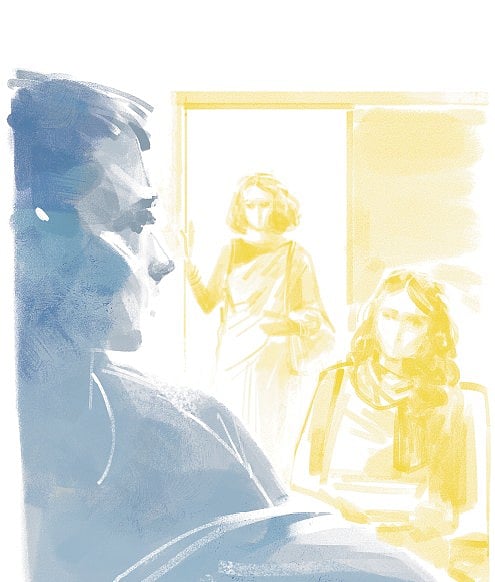
Riyad returned to work after a severe fever and was shocked to see a new female colleague who bore an uncanny resemblance to his old friend, Ira. The new employee, named Neera, had joined the company after Riyad's former colleague, Zisan, emigrated. Initially, Riyad was convinced Neera was Ira, despite Ira having moved to Australia years ago with her husband and children, where she worked as a research assistant. Neera, however, claimed it was her first job and that she had never met Riyad before, introducing herself as Neera. Throughout the day, Neera's mannerisms and conversational style reminded Riyad strongly of Ira, even though he knew Ira had no brothers and her father had passed away when she was young, whereas Neera spoke of her responsibilities as the eldest daughter caring for her ill father and mentioned a brother-in-law named Dipu who helped her get the job. Later that day, Riyad felt unwell again and went home, eventually collapsing and waking up in the hospital. His doctor friend, Tanmoy, suspected a neurological issue or infection, possibly Capgras syndrome, where a person is mistakenly identified as someone else. To investigate, Tanmoy visited Riyad's office and confirmed that Neera indeed looked exactly like Ira and behaved similarly, not recognizing him either. Riyad, recovering, insisted Neera was Ira's doppelganger, not a delusion.
This narrative explores the psychological impact of severe illness and the human tendency to seek familiar patterns, even in the face of contradictory evidence. The protagonist's experience with Neera, a striking look-alike of his former friend Ira, highlights the complexities of perception and memory. While initially attributing the resemblance to a potential delusion stemming from his illness, the persistent similarities in Neera's behavior and speech prompt a deeper consideration of the phenomenon of doppelgangers. The story subtly questions whether such uncanny resemblances are purely coincidental or if there are underlying biological or psychological explanations, leaving the reader to ponder the nature of identity and recognition in a world where external appearances can be so profoundly deceiving.
AI-generated to prompt reflection — not editorial opinion, not advice, not a statement of fact. How this works.