Man Offers Free Water to Train Passengers in Memory of His Son
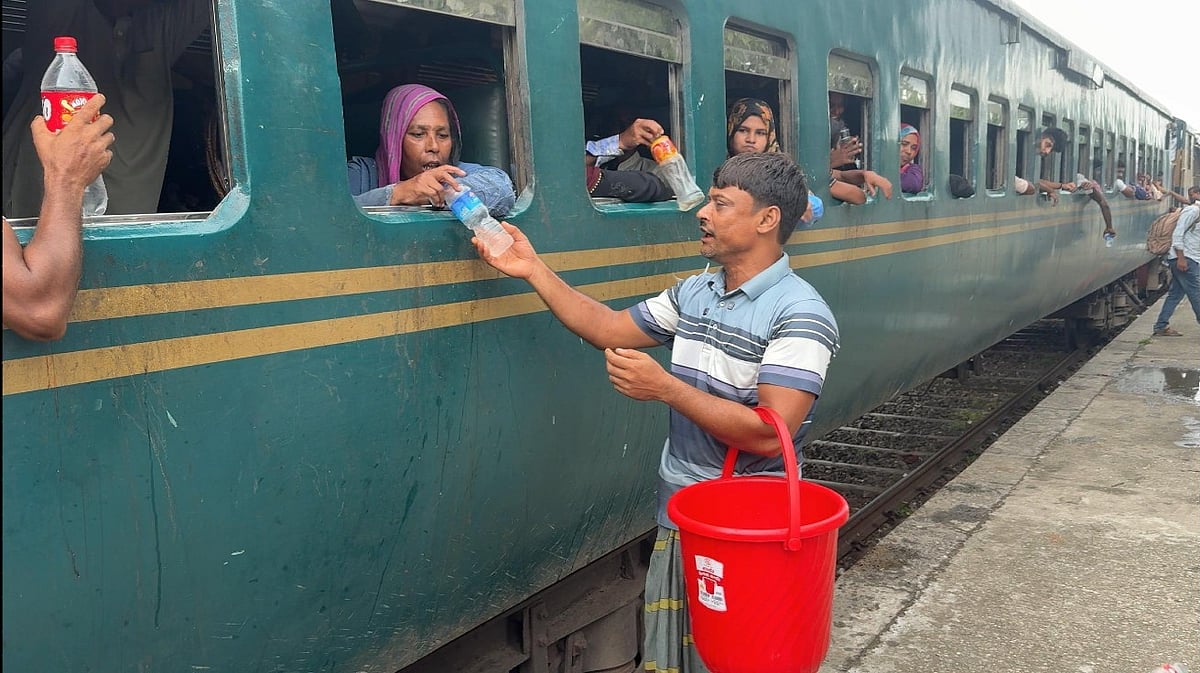
Munnu Sheikh, a 45-year-old man from Kalukhali Upazila in Rajbari, Bangladesh, has been providing free cold water to train passengers at the Kalukhali station for the past five to six years. He runs a mobile chatpati stall at the station and uses the profits to buy bottled water, which he fills with fresh, cold water from a tube well. Every day around 3:30 PM, as the Nakshikantha Mail train arrives, he rushes to the platform, handing out bottles of water to thirsty travelers. He requests passengers to return the empty bottles to the platform after use. Sheikh's selfless act is a tribute to his late son, Sabuj Sheikh, who died of blood cancer in 2020 at the age of nine. During Sabuj's frequent trips to Rajshahi Medical College Hospital for treatment, Munnu often lacked the money to buy water for his son. After his son's passing, Munnu vowed to ensure no other traveler would suffer from thirst at the station. He distributes 30 to 35 bottles of water daily, a task that requires him to close his chatpati stall for about an hour and a half. Despite the financial loss, Sheikh finds solace and fulfillment in helping others and feels his son's memory is honored. His actions have been praised by passengers and recognized by local authorities, with the Upazila Nirbahi Officer (UNO) acknowledging his humanitarian work and providing him with financial assistance.
Munnu Sheikh's initiative, driven by personal tragedy, highlights the profound impact of individual altruism in addressing basic needs unmet by formal infrastructure. While his dedication is commendable, it also underscores systemic gaps in public services, particularly access to clean drinking water for transient populations. The act, while deeply personal, serves as a powerful, albeit localized, reminder of the social responsibility that extends beyond profit motives. The recognition and support from the local administration are positive steps, suggesting a potential for scaling such community-driven solutions. However, the long-term sustainability and broader replicability of such efforts depend on integrating them into more robust public health and transportation policies, ensuring that basic amenities are consistently available rather than relying on the goodwill of individuals.
AI-generated to prompt reflection — not editorial opinion, not advice, not a statement of fact. How this works.