Man Pulls Injured Jaguar by Tail on Brazilian Highway; Animal Remains Missing
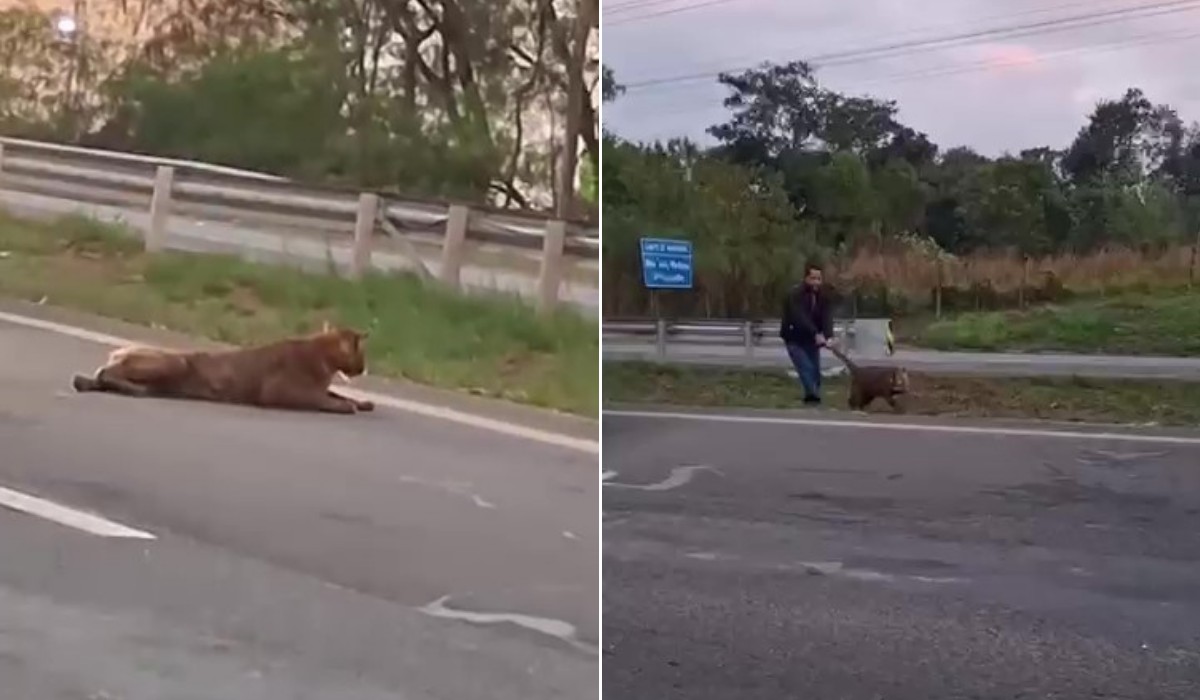
A jaguar was filmed being pulled by its tail on a highway in Piracicaba, São Paulo, Brazil, on Tuesday, May 7th. Biologist Ana Carla Medeiros from Esalq/USP explained that the jaguar's lack of reaction was likely due to its weakened state. Images show a man pulling the animal to the central median of Rodovia Cornélio Pires (SP-127). A witness, who identified himself as Matheus, reported that the jaguar was hit by a car and stopped to assist. Medeiros stated that if the animal had not been so severely injured, the man could have been bitten. The witness observed the jaguar appeared disoriented, was panting, and struggled to move, suggesting it was in pain and frightened by the accident. A joint task force, including Environmental Military Police, veterinarians, and biologists, launched a search for the jaguar. The search area covered approximately 1 square kilometer, involving searches on foot in nearby vegetation and sugarcane fields, utilizing tracking techniques based on paw prints and other animal signs. Residents were instructed to report any sightings to environmental authorities. As of the latest update, the jaguar had not been located.
The incident highlights the precarious coexistence between wildlife and expanding human infrastructure, particularly roadways. The immediate response involved human intervention, which, while seemingly intended to aid the animal, carried inherent risks given the jaguar's potentially compromised state. The subsequent search effort demonstrates a coordinated approach to wildlife recovery, emphasizing the importance of specialized teams and public awareness in such events. Looking ahead, this situation underscores the need for enhanced wildlife-crossing infrastructure and public education campaigns to mitigate human-wildlife conflict, especially in areas where natural habitats intersect with transportation networks. Proactive measures are crucial to prevent future occurrences and ensure the safety of both humans and endangered species.
AI-generated to prompt reflection — not editorial opinion, not advice, not a statement of fact. How this works.