Man Pulls Jaguar by Tail on Highway; Wildlife Officials Advise Caution
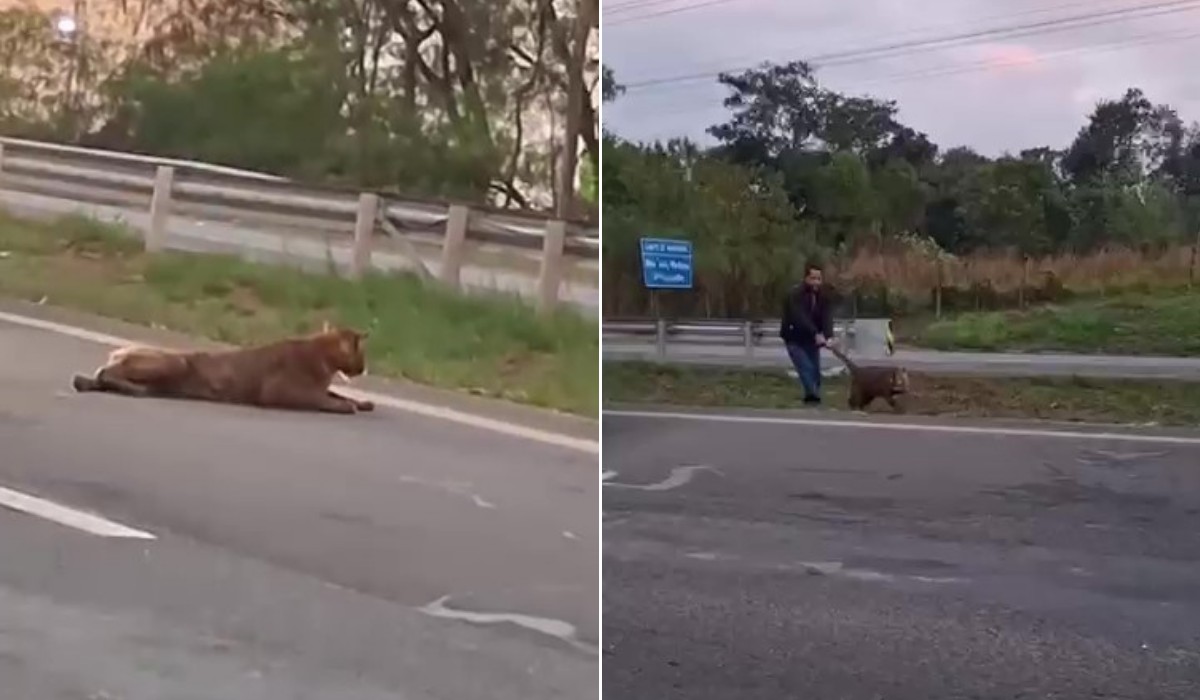
A man was filmed pulling a jaguar by its tail on a highway in Piracicaba, São Paulo, Brazil, on Tuesday, September 7th. The incident prompted environmental police to issue guidelines for public interaction with wild animals. Captain Ivo Moraes of the Environmental Police stressed that the primary action for anyone encountering a wild animal, especially on a road, is to immediately call emergency services at 190. He advised against stopping vehicles, feeding, or approaching too closely to film the animal. The jaguar in question had reportedly been hit by a car, which stopped to render aid. A joint task force, including environmental police, veterinarians, and biologists, was mobilized to locate the animal, but it remained at large as of the report's last update. Captain Moraes downplayed the risk to the public, stating it is negligible if proper distance is maintained, as jaguars naturally avoid humans. The primary risk, he noted, is to the animal itself. Biologist Ana Carla Medeiros suggested the jaguar's lack of reaction was due to its weakened state following the accident. The area where the incident occurred is near forest fragments and ecological corridors, which are natural habitats for such wildlife, leading to frequent sightings. A witness described the jaguar as appearing frightened and having difficulty moving after the collision, before managing to stand up and move away.
This incident highlights the complex intersection of human infrastructure and wildlife habitats, exacerbated by increasing development. While the immediate response focused on the individual's actions and public safety advice, a broader systemic perspective is warranted. The presence of a large predator like a jaguar on a busy highway indicates habitat fragmentation and potential encroachment into its natural territory. Future urban and infrastructure planning must more robustly integrate ecological corridors and wildlife mitigation strategies to prevent such dangerous encounters. Furthermore, public education campaigns should emphasize responsible wildlife observation, focusing on the welfare of the animals and the safety of both humans and fauna, rather than sensationalism. The incident underscores the need for proactive conservation efforts and land-use policies that acknowledge and accommodate the needs of native species in shared landscapes.
AI-generated to prompt reflection — not editorial opinion, not advice, not a statement of fact. How this works.