Man Unharmed After Tree Falls on Him Amid Fierce Winds in Rio de Janeiro
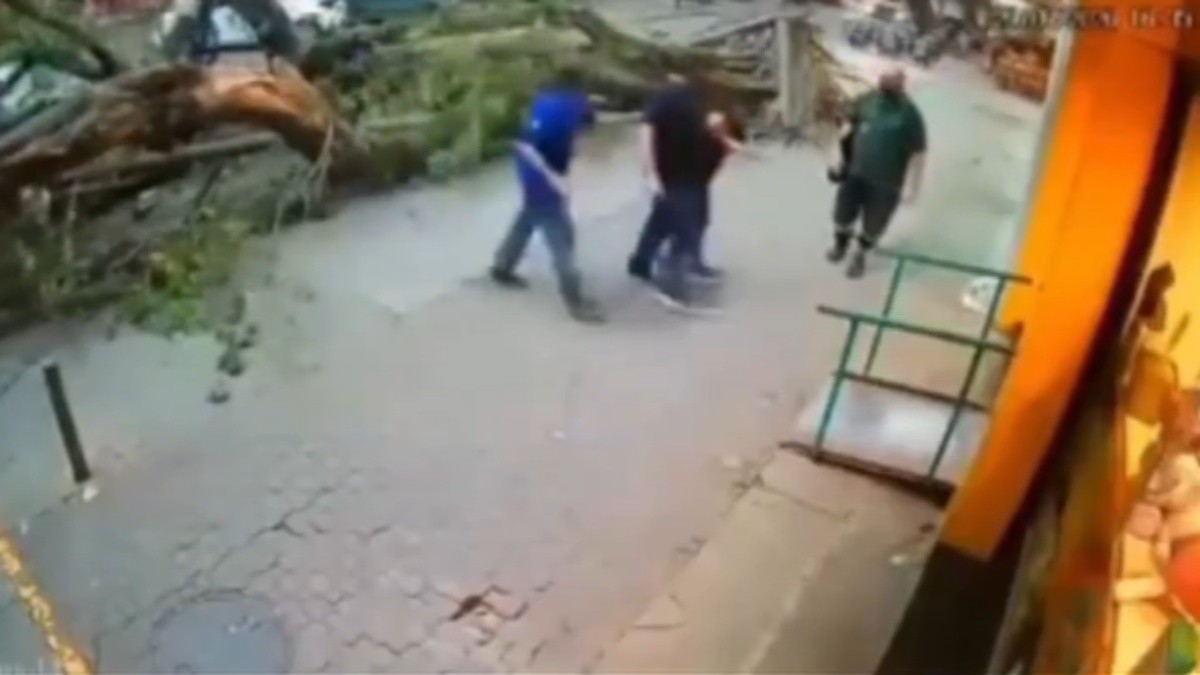
A man in Rio de Janeiro's Tijuca neighborhood narrowly escaped serious injury when a tree collapsed on him during severe windstorms on Wednesday, November 29th. Security camera footage captured the dramatic moment as the pedestrian was struck by the falling tree and a utility pole it brought down. He was seen being helped by other pedestrians shortly after the incident. The powerful winds, with gusts exceeding 100 km/h, caused widespread damage across the city and the surrounding state. Tragically, two people died in Santa Teresa when a wall collapsed due to the same storm, including former footballer Tássio Maia. Additionally, a fisherman went missing in Angra dos Reis. The storm also led to other disruptions, such as beachgoers being forced from Ipanema beach, a sandstorm on Linha Vermelha, and structural damage like a water tank falling from a building in Nova Iguaçu. Mayor Eduardo Cavaliere urged residents to exercise caution, avoid open areas and building overhangs, and minimize non-essential travel due to downed trees, traffic light malfunctions, and power outages affecting the entire state of Rio de Janeiro. Civil Defense issued safety recommendations, including securing loose objects, staying away from trees and power lines, and avoiding outdoor activities.
The severe weather event in Rio de Janeiro highlights the critical interplay between urban infrastructure, climate vulnerability, and public safety preparedness. The incident involving the pedestrian narrowly avoiding harm underscores the inherent risks in densely populated areas subject to extreme weather, particularly concerning aging urban trees and utility infrastructure. While the immediate focus is on individual survival and damage mitigation, a broader analysis points to systemic challenges in urban planning and climate adaptation. The city's response, including mayoral advisories and Civil Defense recommendations, reflects reactive measures. Looking ahead, a proactive approach focusing on enhanced tree management, resilient infrastructure design, and more robust early warning systems could significantly reduce the impact of future weather events. Evaluating the effectiveness of current urban green space management and utility maintenance protocols against the backdrop of escalating climate volatility is essential for long-term public safety and resilience.
AI-generated to prompt reflection — not editorial opinion, not advice, not a statement of fact. How this works.