Managed Exchange Rate Hinders Pakistan's Exports and Investment, Say Exporters
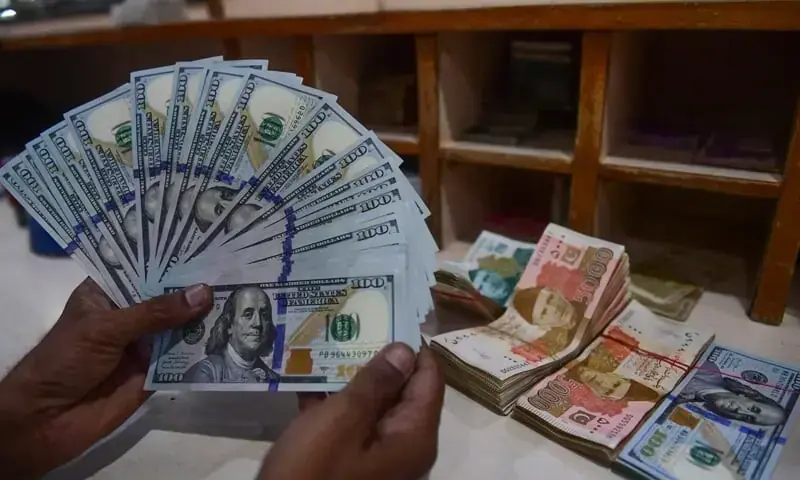
Pakistani exporters are expressing significant concern over the country's managed exchange rate policy, arguing that an artificially strong rupee is detrimental to both export competitiveness and foreign investment. For the past 18 months, the Pakistani rupee has gradually appreciated against the US dollar, gaining at least Rs4. This trend, while potentially intended to stabilize the economy, has led to a surge in imports, widening the trade deficit to $39 billion in the fiscal year 2026, despite substantial remittance inflows of $41.5 billion. Exporters note that regional currencies, including those of India and Bangladesh, have depreciated against the dollar, making Pakistani goods less competitive internationally. Javed Bilwani, an exporter and former president of the Karachi Chamber of Commerce and Industry, highlighted that production costs are now 12% higher than in China, making it impossible to compete. He advocates for gradual depreciation of the rupee to boost export proceeds and encourage reinvestment. The current policy is also blamed for a surge in imports, including a notable increase in car imports, further exacerbating the trade deficit. Analysts point to the Real Effective Exchange Rate (REER) rising to 106.4, indicating the rupee is overvalued. This situation is discouraging foreign investors, leading to declining investment. Exporter Amir Aziz added that the policy, coupled with high interest rates of 11.5% and ongoing smuggling from neighboring countries like China and Iran, is prompting exporters to consider closing their businesses. Despite government incentives and plans to increase exports to $60 billion and double trade with the US to $20 billion in five years, exporters question the feasibility given the stagnation in manufacturing sectors over the past three years.
The Pakistani government's intervention in managing the exchange rate, aiming for stability, appears to have created an unintended consequence of reduced export competitiveness and diminished foreign investment appeal. By artificially strengthening the rupee, the nation's goods become more expensive on the global market, while imports become cheaper, thus widening the trade deficit. This policy creates a systemic contradiction: the desire for economic stability through currency strength clashes with the imperative for export-led growth. Future economic strategies may need to balance currency valuation with the need to foster domestic manufacturing and export capacity, potentially exploring more market-driven exchange rate mechanisms. The long-term sustainability of export targets hinges on addressing structural issues like production costs and global market positioning, rather than relying solely on exchange rate management.
AI-generated to prompt reflection — not editorial opinion, not advice, not a statement of fact. How this works.