Manatee Rescued from Polluted Jaguaribe River in João Pessoa
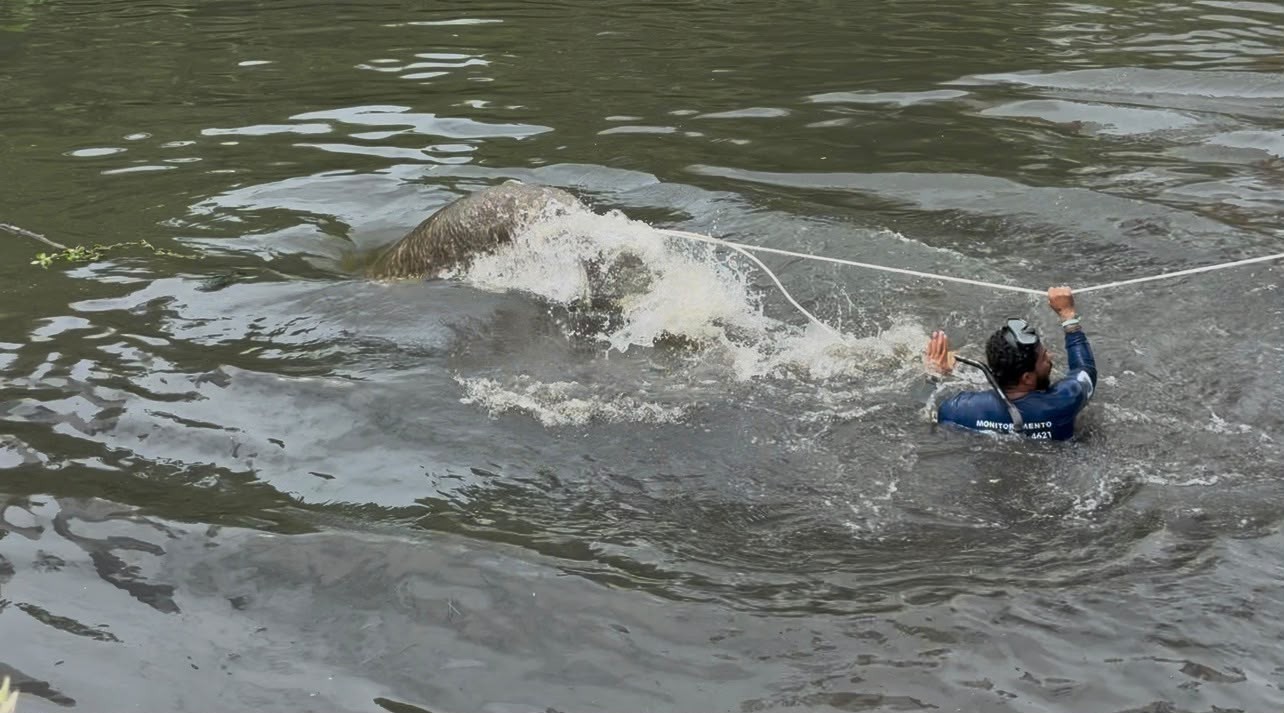
A monitored manatee was rescued from the Jaguaribe River in João Pessoa, Paraíba, Brazil, on Monday, June 3rd. The animal had been observed in the São José neighborhood over the weekend. According to the Cetáceos da Costa Branca project, an initiative of the State University of Rio Grande do Norte (UERN) focused on marine mammal conservation, the manatee was already being tracked by a team. It had previously traveled through the Paraíba and Mandacaru rivers before reaching the Jaguaribe. Ecologist Iara Medeiros explained that radiotelemetry allowed the team to monitor the manatee's movements. When the animal reached the Jaguaribe, support was requested from the Aquatic Mammals Foundation for an intervention to ensure its health. The rescue operation involved the Viva o Peixe-Boi-Marinho project team and attracted the attention of local residents. Approximately seven men were needed to carefully remove the manatee from the water using a net. Veterinarian Vanessa Rabelo stated that the rescued manatee will be released into an environment with suitable aquatic conditions, including adequate food sources and freshwater, as the Jaguaribe River lacks these necessities for the animal's well-being and development. This rescue highlights the ongoing environmental concerns for the Jaguaribe River, which in April 2026 faced a lawsuit from the Public Prosecutor's Office of Paraíba (MPPB) against Cagepa, Sudema, and the municipalities of João Pessoa and Cabedelo. The lawsuit cited severe environmental degradation, including altered water quality, chemical odors, fish kills, and compromised coastal water quality.
The rescue of a monitored manatee from the Jaguaribe River underscores the critical need for robust environmental protection measures in urban waterways. The incident highlights a systemic challenge where urban development and industrial activities can degrade aquatic ecosystems, posing direct risks to wildlife. The involvement of multiple research and conservation organizations, alongside state and municipal bodies, demonstrates a collaborative approach to wildlife rescue, but also points to the underlying governance issues that permit such environmental degradation. Future efforts should focus on proactive pollution control and habitat restoration, rather than reactive interventions. The long-term health of these river systems, vital for biodiversity and public well-being, depends on sustained regulatory enforcement and investment in sustainable urban planning that prioritizes ecological integrity alongside economic activity.
AI-generated to prompt reflection — not editorial opinion, not advice, not a statement of fact. How this works.
