Manaus chemical plant cooling efforts exceed 60 hours amid persistent odor
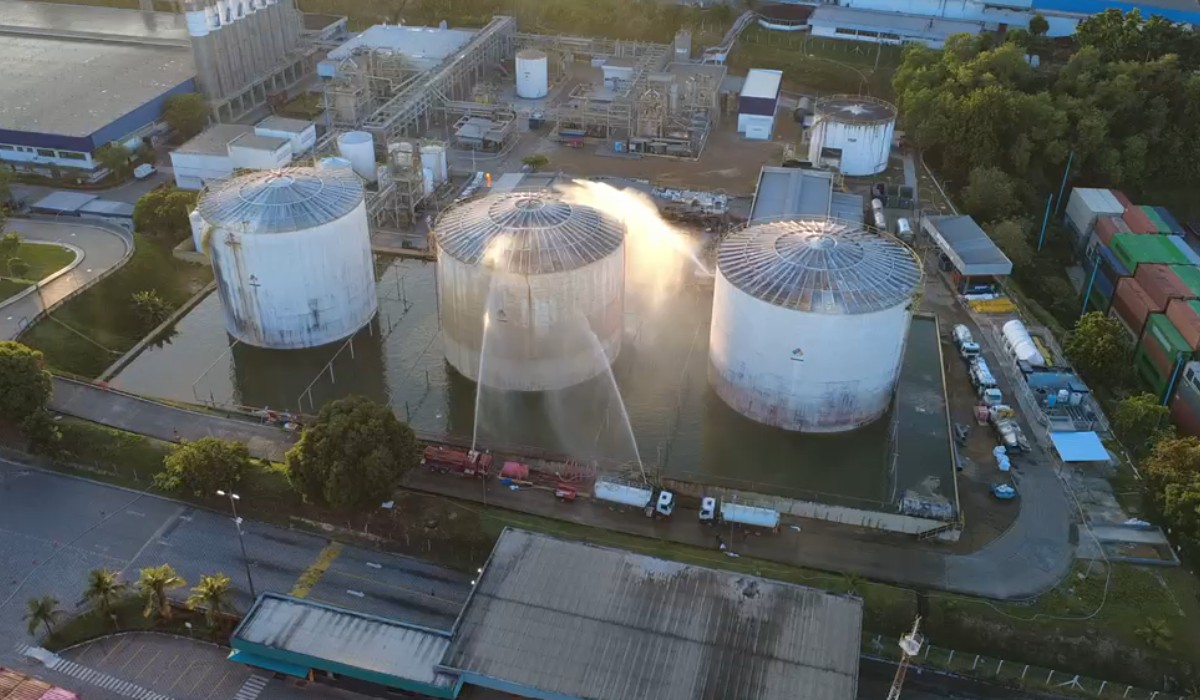
Firefighters in Manaus, Brazil, have been working for over 60 consecutive hours to cool tanks at the Innova chemical factory following a styrene monomer leak that began on Wednesday, November 15th. The substance is highly flammable and toxic. While the release of vapors has significantly decreased and the smoke is nearly invisible, a strong chemical odor persists, necessitating the maintenance of a 300-meter safety perimeter. Firefighters are using laser equipment to monitor the tank's internal temperature and cool its exterior to prevent re-ignition or explosion. The incident, which started at 5:36 PM on November 15th due to an abnormal temperature rise in the storage tank, prompted the evacuation of an adjacent company. The state health department reported 211 individuals sought medical attention for symptoms related to gas inhalation by Friday, November 17th, with one death occurring in a 67-year-old man who had a pre-existing respiratory condition. Additionally, 147 people were treated at a private hospital and 57 at municipal health units. Small fissures were discovered on the tank's external structure, attributed to the extreme temperature increase, and are being closely monitored by engineers and firefighters. The Innova factory has been partially interdicted by environmental and oversight agencies, halting operations in affected areas until risks are eliminated and stability is confirmed. The company was fined nearly R$10 million by the Manaus City Hall for soil, water, and air pollution, stemming from inspections that identified tank fissures and gas emissions. Innova stated on Wednesday that the situation was controlled according to emergency protocols, with no liquid leakage or injuries, and assured clients there would be no supply disruptions.
The sustained response to the Manaus chemical leak highlights the critical importance of robust industrial safety protocols and emergency preparedness. The event underscores the potential for exothermic reactions in chemical storage, particularly with substances like styrene monomer, and the necessity for continuous, precise monitoring to prevent catastrophic failures. The significant number of individuals seeking medical attention points to the widespread public health implications of such industrial accidents, even when direct fatalities are not immediately attributed to the event itself. Regulatory oversight, exemplified by the substantial fines imposed, plays a crucial role in incentivizing corporate accountability. Moving forward, a focus on advanced predictive modeling for chemical stability and enhanced community alert systems will be paramount in mitigating risks associated with industrial chemical storage in densely populated or environmentally sensitive areas, especially in the context of evolving climate conditions that could exacerbate temperature fluctuations.
AI-generated to prompt reflection — not editorial opinion, not advice, not a statement of fact. How this works.