Manaus City Councilor Rosinaldo Bual Denied Request to Remove Electronic Monitoring
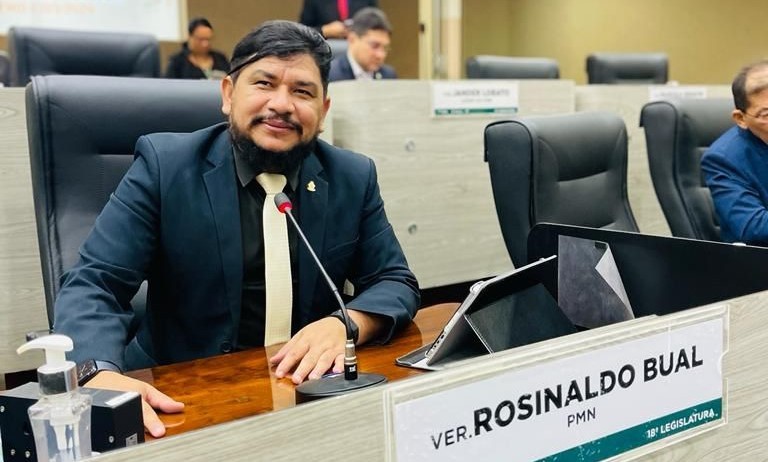
The Superior Court of Justice (STJ) in Brazil has rejected a request from Manaus City Councilor Rosinaldo Bual (Agir-AM) to lift the precautionary measures imposed upon him. These measures include the mandatory use of an electronic monitoring device and a prohibition from physically accessing the Manaus Municipal Chamber (CMM). The decision was issued by STJ President Minister Herman Benjamin on Tuesday, February 21st. Bual was arrested in October 2025 as part of an operation investigating alleged 'rachadinha,' a scheme where public officials allegedly embezzle funds by forcing subordinates to return a portion of their salaries. The Public Prosecutor's Office claims that Bual's office staff were instructed to transfer half of their salaries to him. At the time of his arrest, over seventeen search and seizure warrants and two arrest warrants were executed. Bual's defense argued in a habeas corpus appeal that these measures constituted an "excess of caution" and that maintaining the electronic monitoring and physical ban amounted to an "anticipation of punishment." Minister Herman Benjamin determined that there was no illegality or urgency at this time to justify suspending the measures. Consequently, the STJ denied the defense's plea, upholding both the electronic monitoring and the ban on physical access to the Manaus Municipal Chamber. Bual is also under investigation for criminal organization, extortion, and embezzlement. His initial preventive detention was replaced by these judicial measures, which remain in effect pending further decisions. During the execution of warrants, authorities discovered three safes containing R$390,000 in cash, two checks totaling over R$500,000, and various documents. More than 100 individuals reportedly worked in Bual's office during his tenure up to the operation.
The STJ's decision to maintain precautionary measures against Councilor Rosinaldo Bual highlights the judicial system's approach to alleged financial misconduct within public office. By upholding the electronic monitoring and access restrictions, the court signals a commitment to ensuring the integrity of ongoing investigations and preventing potential obstruction. This stance reflects a broader trend of increased scrutiny on public officials suspected of corruption, particularly schemes like 'rachadinha' that directly impact taxpayer funds and public trust. The court's reasoning emphasizes the absence of immediate grounds for lifting the measures, suggesting that the burden of proof for demonstrating a change in circumstances lies with the defense. This case underscores the complex balance between an individual's rights and the imperative of safeguarding public resources, particularly as technological surveillance tools become more integrated into the justice system.
AI-generated to prompt reflection — not editorial opinion, not advice, not a statement of fact. How this works.