Manaus Operation Seizes 3.4 Tons of Skunk; Suspects Escape
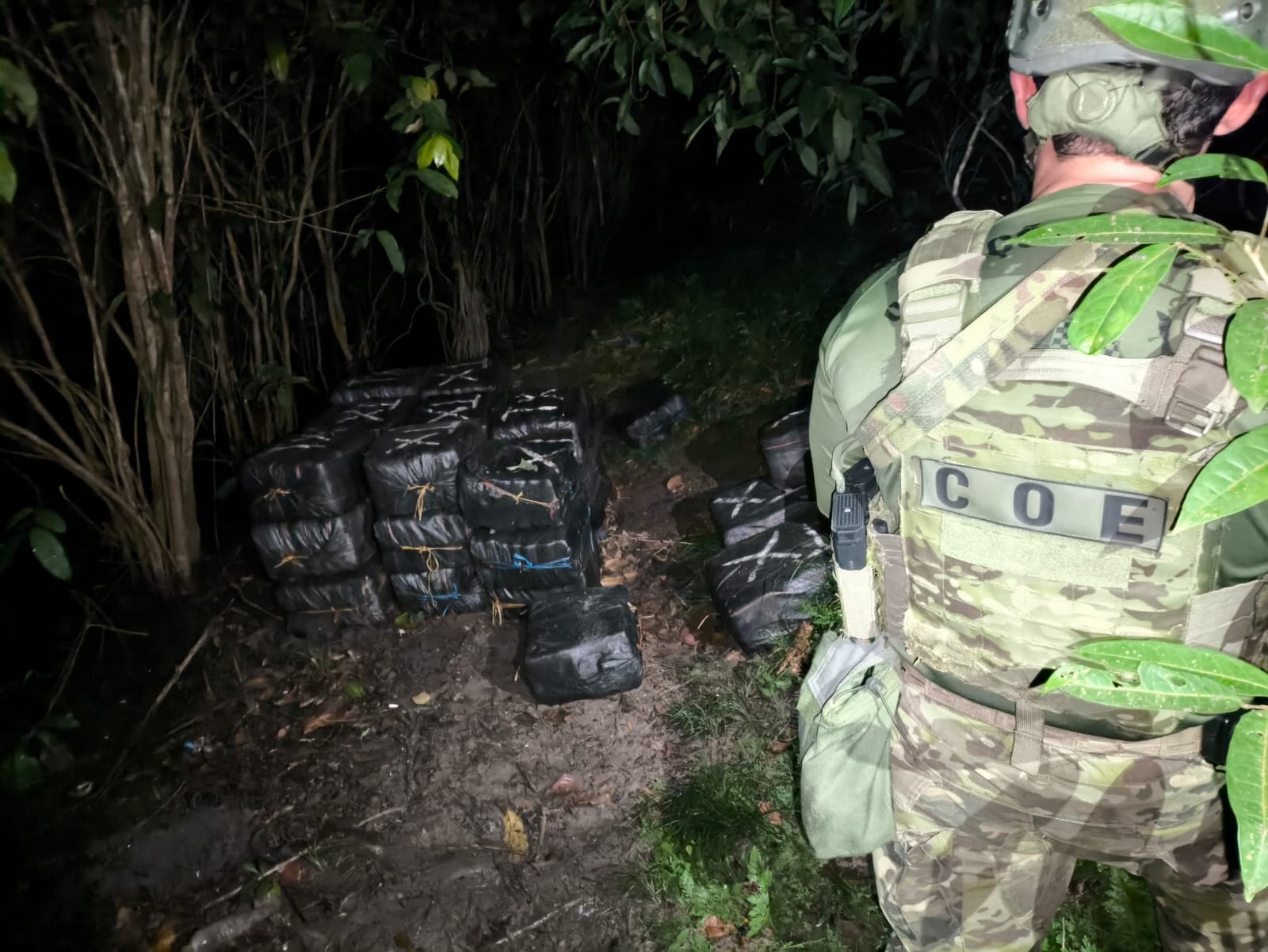
An integrated security operation in Manaus, Brazil, resulted in the seizure of 3.4 tons of skunk (a type of marijuana) on Monday night, June 6th. The discovery was made in the Colônia Antônio Aleixo neighborhood in the city's East Zone. In addition to the substantial drug haul, authorities also confiscated a boat and a motorcycle believed to have been used in transporting the illicit cargo. No suspects were apprehended as they managed to escape during the police operation.
The operation commenced following intelligence shared among law enforcement agencies, indicating that a vessel carrying drugs was en route to Manaus. Investigations suggest the skunk originated from the tri-border region encompassing Brazil, Colombia, and Peru. During the search, special police units located an aluminum boat, approximately eight meters long with an outboard motor, on Lago do Aleixo. The boat was laden with sacks of the drug. Upon noticing the approaching police, the individuals on board abandoned the vessel and fled into a wooded area.
Further searches in a flooded area within the Colônia Antônio Aleixo neighborhood uncovered additional sacks of the drug. A motorcycle, identified by the Military Police of Amazonas (PMAM) as being used to support the drug transport, was also seized. The confiscated drugs and vehicles were transferred to the Civil Police's Department of Repression to Organized Crime (DRCO) for continued investigation.
This operation highlights the persistent challenge of cross-border drug trafficking, particularly from the tri-border region, into major Brazilian urban centers like Manaus. The significant quantity of skunk seized points to the scale of organized criminal networks operating in these areas. While the seizure represents a success for law enforcement, the escape of the suspects underscores the logistical and tactical advantages these groups often possess, especially when utilizing waterways and remote terrains. Future interdiction efforts will likely need to focus on enhanced intelligence sharing across national borders and improved real-time tracking capabilities to counter the dynamic escape tactics employed by traffickers. The involvement of multiple national and regional agencies suggests a growing recognition of the transnational nature of this threat and the necessity of coordinated international responses.
AI-generated to prompt reflection — not editorial opinion, not advice, not a statement of fact. How this works.