Manaus Traffic Changes Announced for Círio de Nazaré Religious Festival
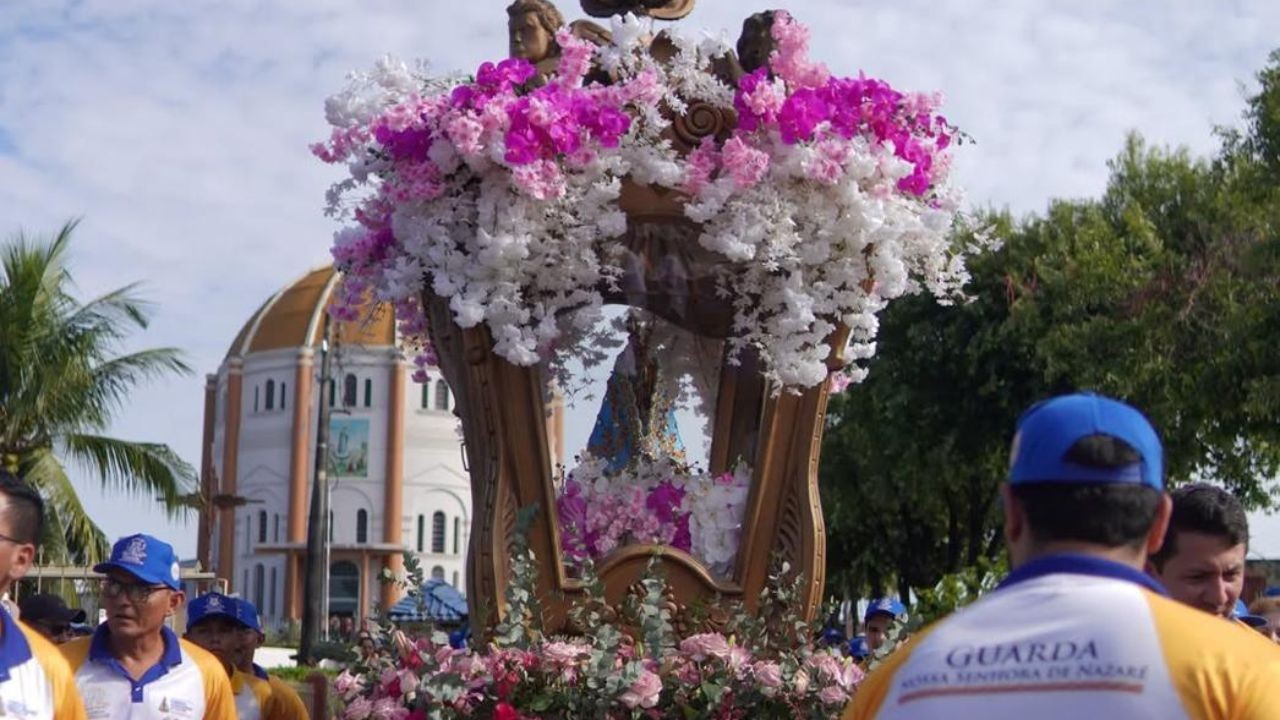
Manaus will implement a special traffic operation from August 1st to August 8th, 2025, to accommodate the Círio de Nossa Senhora de Nazaré religious festival. The Municipal Institute of Urban Mobility (IMMU) will coordinate the operation to ensure public safety, manage traffic flow, and minimize disruptions during processions and religious events. The program begins on Saturday, August 1st, at 7 PM with the Transladação da Imagem de Nossa Senhora de Nazaré procession. This procession will start at Praça Nossa Senhora de Nazaré and proceed through several avenues, including Mário Ypiranga Monteiro, Teresina, Maceió, Major Gabriel, and Tarumã, concluding at the Santuário Nossa Senhora de Fátima. On Sunday, August 2nd, at 7 AM, the main Círio procession will take place. It will depart from the Santuário Nossa Senhora de Fátima and follow a route along avenues Tarumã, Duque de Caxias, Humberto Calderaro Filho, and streets Natal and Mário Ypiranga Monteiro, returning to Praça Nossa Senhora de Nazaré. The festivities will conclude on August 8th at 4 PM with the Círio das Crianças e Jovens procession, also starting and ending at Praça Nossa Senhora de Nazaré, with a route via avenues Mário Ypiranga Monteiro, Teresina, Humberto Calderaro Filho, and Rua Natal. Traffic agents will be stationed along the routes to guide pedestrians and drivers, with monitoring conducted by the City Cooperation Center (CCC). Temporary road closures will be in effect during processions. IMMU's Director of Traffic Operations, Stanley Ventilari, urged drivers to cooperate and follow instructions from traffic teams, advising them to plan journeys in advance, use alternative routes, and exercise caution near event areas.
The traffic management plan for Manaus's Círio de Nazaré festival highlights the recurring challenge of balancing public religious observances with urban mobility. The IMMU's strategy of deploying traffic agents and implementing temporary road closures aims to mitigate inevitable disruptions. This approach, common in many cities globally, reflects a system that prioritizes established cultural events through temporary restrictions on normal traffic patterns. Looking ahead, as urban populations grow and event scales remain significant, cities may explore more integrated smart city solutions for real-time traffic rerouting and public information dissemination. Such advancements could potentially reduce reliance on extensive physical road closures, offering a more dynamic and less intrusive management of urban space during large-scale public gatherings.
AI-generated to prompt reflection — not editorial opinion, not advice, not a statement of fact. How this works.