Maradona Remembered as a Rebel Against FIFA's Power
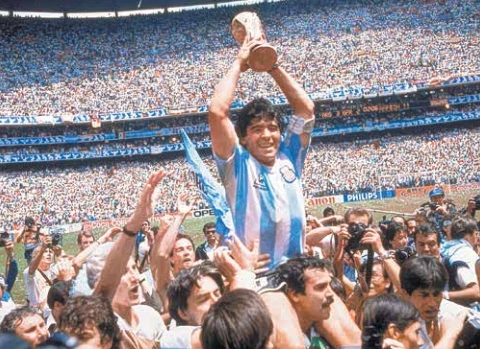
The discussion surrounding footballers' inaction against political and footballing power struggles has resurfaced following the Balogun case at the World Cup. Former Italian star Marco Tardelli, an icon of the 1982 World Cup, stated that only Diego Maradona dared to oppose FIFA. Tardelli admitted that players, including himself, were cowardly in their stance against the sport's governing bodies. This sentiment highlights a recurring theme of passive acceptance among players when confronted with the complex interplay of politics and power within football. Maradona's legacy is thus being re-examined through the lens of his willingness to challenge established authorities, contrasting with the perceived timidity of many of his peers. The Balogun incident has reignited debates about player activism and the responsibility of athletes to use their platforms for broader social and political issues. Tardelli's remarks suggest a deep-seated regret among some former players about missed opportunities to confront institutional power more directly. The comparison between Maradona's era and the present day underscores the enduring challenges of navigating the intersection of sport and power.
The resurfacing of discussions about Diego Maradona's defiance against FIFA, prompted by recent events, highlights a persistent tension between athlete agency and institutional power in global sports. Maradona's historical opposition is now framed as a rare act of rebellion against a system often characterized by its centralized control and political maneuvering. This perspective invites consideration of the systemic incentives that may discourage current athletes from similar confrontations, potentially due to career risks or a perceived lack of collective support. The analysis suggests that while individual acts of courage can inspire, the broader challenge lies in fostering an environment where athletes feel empowered to address governance issues without compromising their professional standing. Examining this dynamic through the lens of evolving media landscapes and increasing athlete awareness could reveal future shifts in the balance of power between players and governing bodies.
AI-generated to prompt reflection — not editorial opinion, not advice, not a statement of fact. How this works.