Marie Curie's Radioactive Lab: From Danger Zone to Safe Museum
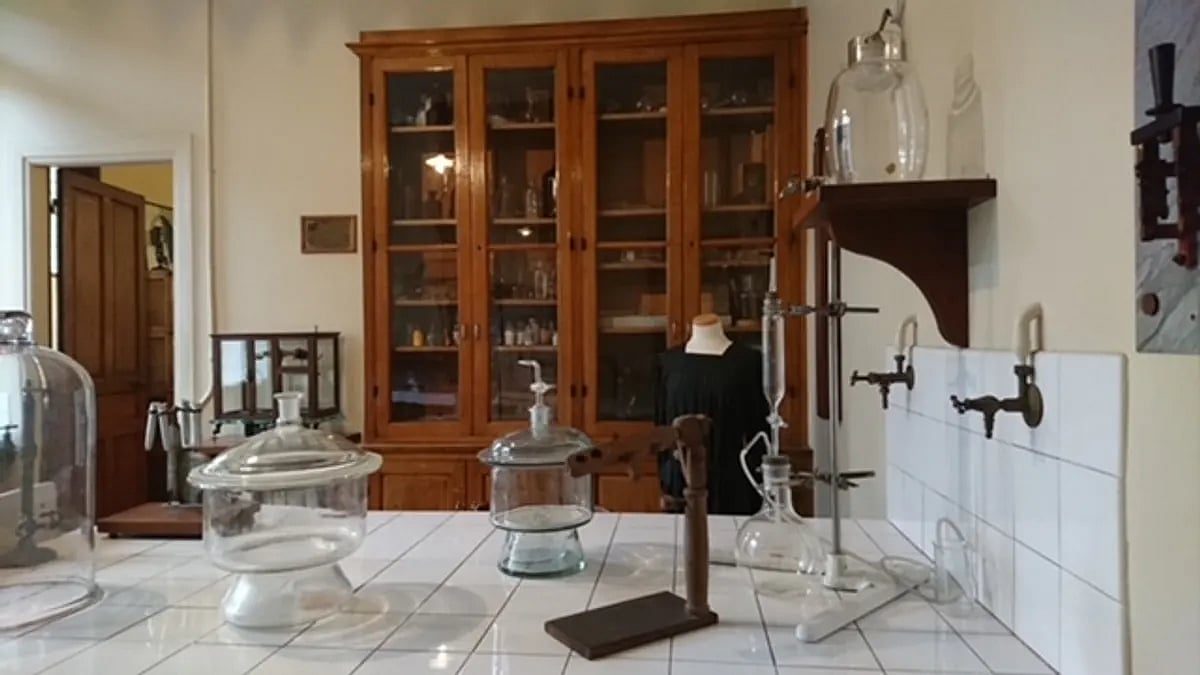
Marie Curie's former laboratory in the heart of Paris, now the Curie Museum, presents a unique challenge: how can a space filled with highly radioactive materials, including her personal diaries, be safely accessible to the public? Curie, the first person to win two Nobel Prizes, died from aplastic anemia, widely believed to be caused by her work with radioactive elements. Her remains were so radioactive that they were interred in a lead-lined coffin. The notebooks and lab equipment from her research, particularly involving Radium-226, remain highly radioactive due to its 1,600-year half-life. While some isotopes have short half-lives, Radium-226's persistence means over 90% of it is still present in the lab's artifacts. The primary danger was not the radioactive elements themselves, but the radon gas produced during their decay. This invisible, odorless gas, Radon-222, readily enters the lungs and causes significant internal damage. The lab's transformation into a safe museum involved extensive remediation. Furniture heavily contaminated by radium particles, which had penetrated deep into the wood, was removed. While this means the lab isn't in its original state, it prevents dangerous radiation exposure. The cleaning process followed modern protocols for radioactive waste, similar to those used for nuclear reactor fuel. Some items, like the door handle still bearing Marie Curie's radioactive fingerprint, are intentionally left as is, deemed less risky than flying at high altitudes. Her most dangerous research was conducted in a separate shed, not the main lab visitors now access. The notebooks, deeply permeated with radioactive dust, are stored in lead-lined boxes and require protective gear and a signed waiver for viewing.
The transformation of Marie Curie's lab into a public museum highlights the enduring challenge of managing hazardous historical sites. While modern remediation techniques have made the space accessible, the inherent radioactivity of artifacts like Curie's notebooks necessitates strict protocols, including protective gear and waivers for viewing. This situation underscores the evolving understanding of radiation safety and the ethical considerations of preserving scientific heritage. It prompts reflection on how societies balance public access to historical knowledge with the imperative to protect individuals from long-term health risks, particularly as the half-life of certain materials far exceeds human lifespans. The decision to preserve certain radioactive elements, like the door handle, as tangible links to the past, while mitigating immediate risks, offers a model for managing other sites with residual hazardous materials.
AI-generated to prompt reflection — not editorial opinion, not advice, not a statement of fact. How this works.