Mario Quintana: The Solitary Poet Gaining Viral Fame Online Decades After Death
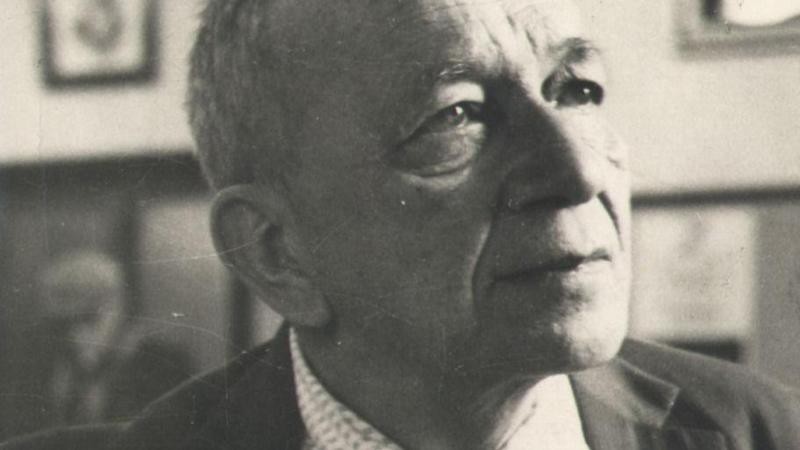
Brazilian poet Mario Quintana (1906-1994), known for his concise and accessible verses on everyday life, is experiencing a resurgence in popularity online, 120 years after his birth and decades after his passing. His poetry, characterized by its simplicity, focus on human experience, and lack of pretension, resonates strongly with contemporary social media users, many of whom share his lines without knowing his authorship. Professor Miguel Sanches Neto notes that Quintana's work has become a common poetic reference, demonstrating its enduring appeal and ability to connect with ordinary people. Writer Saulo Florentino observes that Quintana's style, which avoids separating depth from complexity, feels personal to readers and is perfectly suited for the fast-paced, phrase-driven nature of social media. Florentino also points out that the widespread sharing of Quintana's verses, even those misattributed to him, highlights a collective recognition of his distinct aesthetic and textual identity.
Literary critic Emerson Rossetti identifies three key elements contributing to Quintana's digital virality: simple language with poetic appeal, themes centered on the everyday and the search for meaning in mundane aspects of life, and synthetic expression. Rossetti describes Quintana as the "anti-text" poet, whose short verses align with the modern reader's preference for brevity. Singer-songwriter Márcio de Camillo, whose children's show "Crianceiras Mario Quintana" has been running since 2018, believes social media is democratizing poetry, allowing authors with "fantastic verses" like Quintana to reach wider audiences. Linguist Vicente de Paula da Silva Martins emphasizes Quintana's unique ability to find poetry in ordinary things, transforming simple observations into profound reflections on life without resorting to complex language or grand events. Martins also notes Quintana's playful use of words, creating verses that feel like conversations yet carry deep meaning, effectively uniting depth and simplicity.
Born in Alegrete, Rio Grande do Sul, on July 30, 1906, Mario de Miranda Quintana moved to Porto Alegre at age 13. He developed his literary talent early, publishing in school and showing an aptitude for French, which foreshadowed his future career as a translator. Quintana translated over 130 significant works, including Marcel Proust's "In Search of Lost Time" and Virginia Woolf's "Mrs. Dalloway." He also worked as a journalist for Revista do Globo and was instrumental in the growth of Livraria do Globo, which became a major publishing house. Despite his eventual posthumous online fame, Quintana died in relative obscurity in 1994, having experienced his peak recognition six decades prior.
The viral resurgence of Mario Quintana's poetry on social media highlights a fascinating interplay between timeless literary themes and modern digital communication platforms. Quintana's concise, emotionally resonant verses, focused on the quotidian and universal human experiences, prove remarkably adaptable to the short-form content prevalent online. This phenomenon underscores a societal shift towards valuing accessible, relatable content, where depth is conveyed through brevity rather than complexity. The misattribution of verses, while a factual inaccuracy, points to a powerful collective recognition of Quintana's distinct aesthetic, suggesting his work has become a cultural touchstone for expressing certain sentiments. This digital afterlife demonstrates how literary legacies can be reinterpreted and amplified by new technologies, potentially democratizing access to poetry but also raising questions about authorship and the preservation of original context in the digital age.
AI-generated to prompt reflection — not editorial opinion, not advice, not a statement of fact. How this works.