Maritime Arteriosclerosis and Geopolitical Heart Attacks
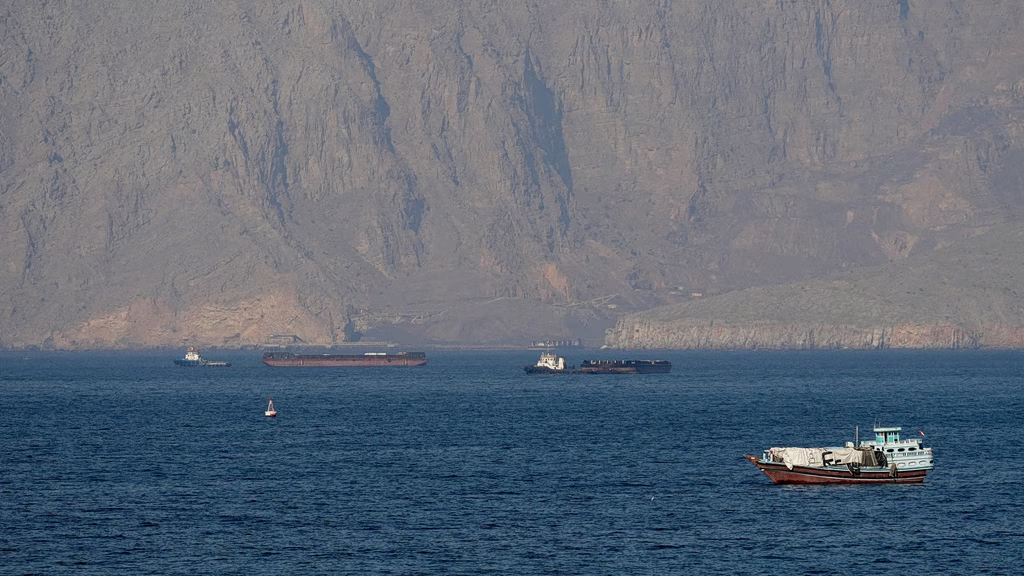
In a June 20, 2026 article titled "Paramilitary Entities," the author previously argued that a US-Iran memorandum confirmed Iran's pivotal role in the Strait of Hormuz. Furthermore, the author asserted that Iran, through its influence over the Houthis, acts as a regulator for the Bab el Mandeb strait at the Red Sea's exit. This perspective suggests a significant shift in geopolitical dynamics and maritime control. The original article implied that these developments alter the established political landscape and potentially create new power structures in critical global waterways. The author's previous work highlighted the strategic importance of these straits and Iran's growing influence in managing maritime traffic and regional stability. The current piece likely revisits or expands upon these themes, examining the implications of such control for international relations and global trade routes. The focus remains on the interplay between state actors, non-state proxies, and the control of vital maritime chokepoints, suggesting a complex web of influence and potential conflict.
This analysis examines the strategic implications of Iran's asserted influence over key maritime chokepoints like the Strait of Hormuz and the Bab el Mandeb strait. The author's framing suggests a geopolitical narrative where control over these waterways translates into significant regional and international leverage. From a systems perspective, such control can impact global energy markets, supply chains, and naval power projection. The interplay between state actors and proxy groups like the Houthis highlights the evolving nature of international security, where traditional state sovereignty is increasingly challenged by non-state actors wielding considerable influence. Future geopolitical stability may depend on the ability of international bodies to manage these complex power dynamics and ensure freedom of navigation, while also addressing the underlying grievances that empower proxy groups. The long-term consequences of these maritime power plays will likely shape regional alliances and global trade patterns for the next decade.
AI-generated to prompt reflection — not editorial opinion, not advice, not a statement of fact. How this works.