Marmosets Invade São Paulo Supermarket, Raising Disease and Ecological Concerns
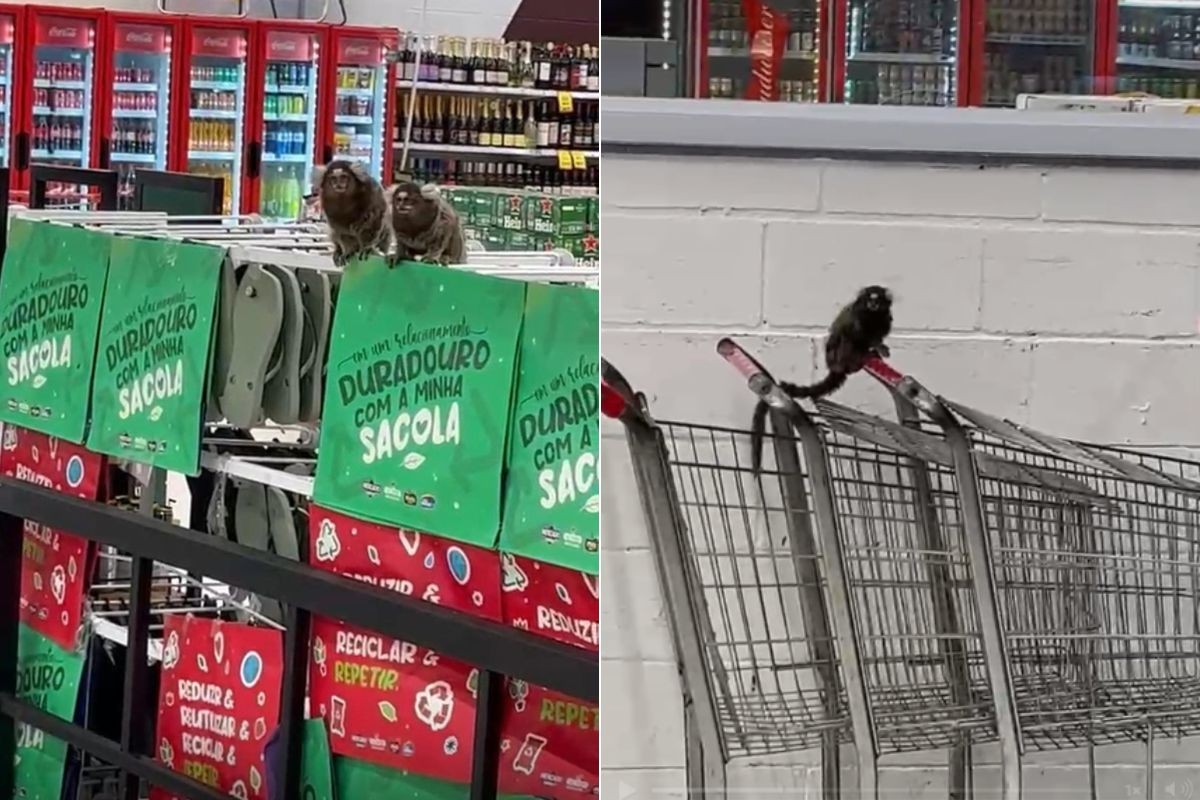
A troop of marmosets entered an Extra supermarket in Itanhaém, on the coast of São Paulo, Brazil, becoming an unexpected attraction for customers. The incident occurred at the Belas Artes branch, where the small primates were observed near the self-checkout stations. A local resident noted that the supermarket's proximity to a wooded area and past instances of marmosets appearing near shopping carts suggest a pattern of increasing human interaction, possibly due to people feeding them. This behavior has led the animals to venture further into the establishment.
Biologists Ricardo Samelo and Isabelle Nunes have warned about the risks associated with this interaction. They explained that marmosets, despite their appearance, can bite and transmit diseases such as rabies, primarily through saliva, but also via feces, urine, or contact with their fur and paws. The presence of marmosets in a food retail environment raises concerns about potential contamination of exposed food items. Furthermore, the biologists highlighted that urban interaction can also endanger the marmosets themselves, exposing them to domestic animals or electrical hazards.
The marmosets observed are considered an invasive exotic species in the Baixada Santista region. Experts believe the animals are likely white-tufted marmosets (Callithrix jacchus), though a hybrid origin cannot be ruled out. These invasive species compete with the native, endangered black-tufted marmoset (Callithrix aurita) for resources, exacerbating the decline of the local population. Marmosets are omnivorous and typically live in groups, consuming fruits, eggs, and even small birds.
The presence of marmosets in a supermarket highlights a complex interplay between urban development, wildlife behavior, and public health. From an ecological perspective, the animals' increasing proximity to human settlements and food sources indicates a disruption in their natural habitat and foraging patterns, potentially driven by habituation and direct feeding by humans. This situation poses a dual risk: to human health through disease transmission and to the native ecosystem by the displacement of endangered species by invasive ones. Addressing this requires a multi-faceted approach, including public education on the dangers of feeding wild animals, stricter enforcement of wildlife interaction regulations, and potentially habitat restoration efforts to support native populations and reduce human-wildlife conflict. The long-term challenge lies in balancing urban expansion with the preservation of biodiversity and public safety.
AI-generated to prompt reflection — not editorial opinion, not advice, not a statement of fact. How this works.