Mars Solar Storms Intensify Heat, Posing Unexpected Risk to Exploration
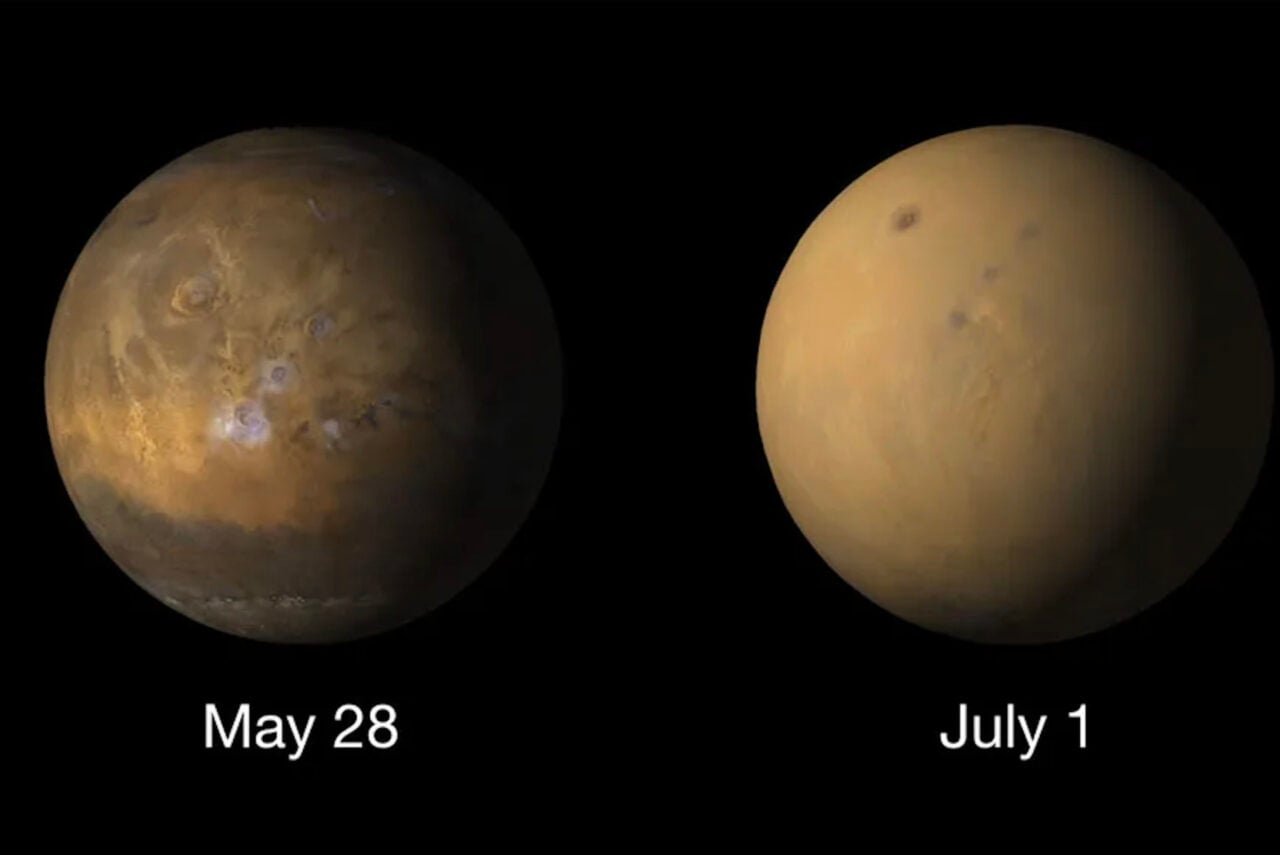
Astronomers have discovered that solar storms and dust storms on Mars combine to significantly amplify surface heat, a phenomenon that poses an unexpected risk to scientific exploration. This synergistic effect can increase temperatures by as much as 90 degrees Fahrenheit (50 degrees Celsius). The findings suggest that previous assessments of Martian surface conditions may have underestimated the potential for extreme heat events. This heightened thermal environment could impact the operational lifespan and safety of robotic missions and future human expeditions. Understanding this interaction is crucial for planning future Mars exploration activities. The combined effect of solar radiation and atmospheric dust particles creates a more volatile and challenging environment than previously understood. This discovery necessitates a re-evaluation of thermal management strategies for spacecraft and equipment intended for the Martian surface. Further research is needed to fully model and predict these intensified heat events.
The discovery of amplified Martian surface heat due to the synergy of solar and dust storms introduces a critical environmental variable for space agencies. This finding underscores the importance of robust atmospheric and solar monitoring systems for future Mars missions, both robotic and human. It highlights a potential systemic underestimation of environmental hazards in mission planning, emphasizing the need for adaptive technologies capable of withstanding more extreme thermal fluctuations. Over the next decade, as AI-driven predictive modeling advances, its application to understanding and mitigating such complex atmospheric interactions on other planets will become increasingly vital for ensuring mission success and astronaut safety.
AI-generated to prompt reflection — not editorial opinion, not advice, not a statement of fact. How this works.