Marsh Deer Filmed Swimming Across Tocantins River in Brazil
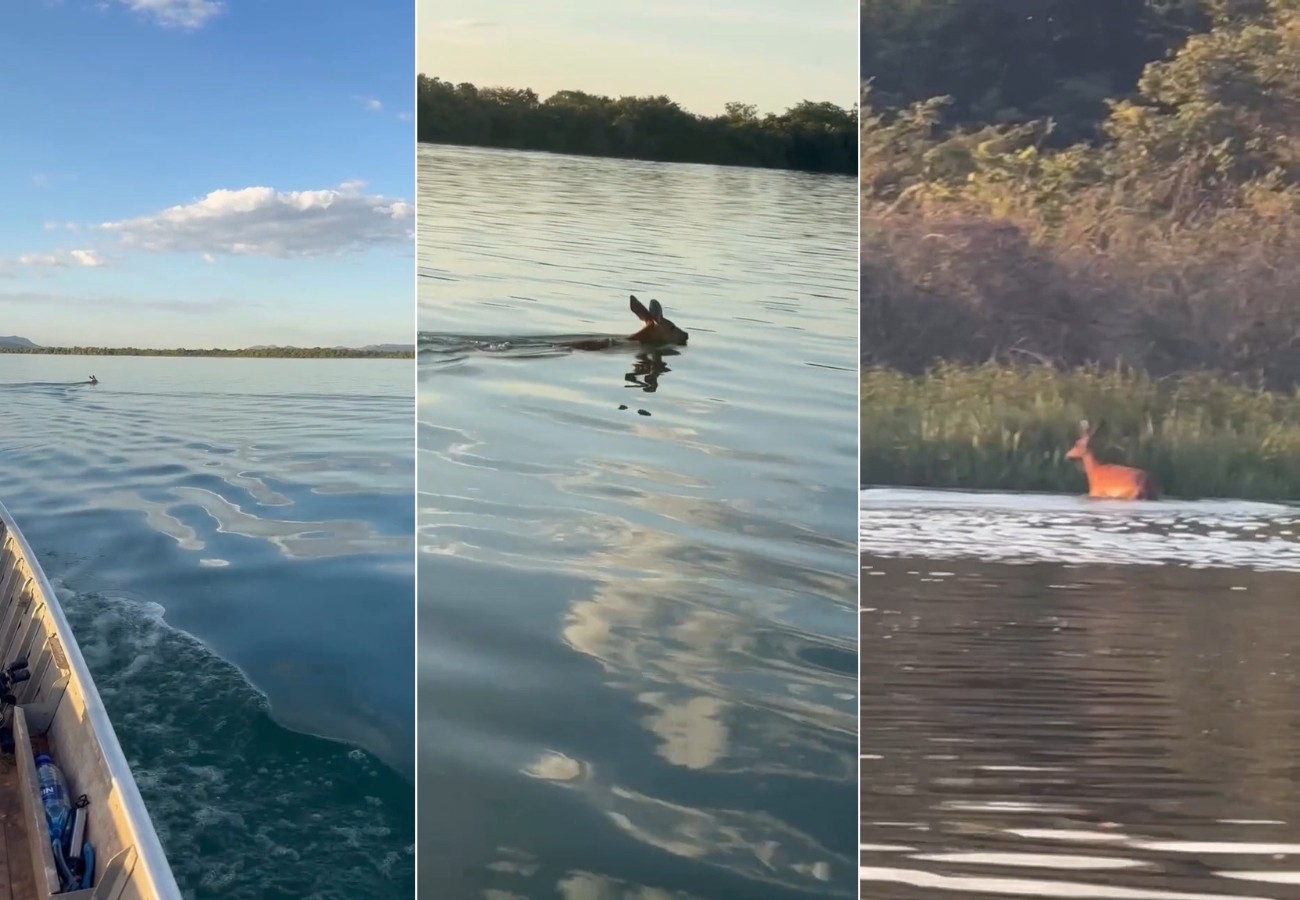
A marsh deer (Blastocerus dichotomus) was filmed swimming across the Tocantins River near Porto Nacional, in the central region of the state of Tocantins, Brazil. The sighting was captured by sports fisherman Luciano Padilha close to the city's bridge, in an area known as “Pé de Manga.” The footage shows the animal calmly entering the water and swimming towards the opposite bank. Padilha initially followed the deer by boat for a few minutes, concerned it might be struggling due to the long crossing. However, upon observing that the animal was calm and swimming with ease, he maintained a distance to avoid disturbing its journey. The video was recorded on Saturday, May 25th. The deer successfully reached the other side and disappeared into the vegetation, with Padilha also recording its emergence from the water. Biologist Wlainer Silva identified the species and noted that while marsh deer are excellent swimmers and river crossings are part of their natural locomotion, this particular event is considered relatively rare due to the significant width of the Tocantins River in this area, formed by the Luís Eduardo Magalhães Hydroelectric Dam. Silva also stated it is not possible to determine the deer's sex or age solely from the video.
This event highlights the resilience and adaptability of wildlife in human-modified landscapes. The marsh deer's successful river crossing, despite the considerable width of the Tocantins River, underscores the species' natural swimming capabilities. While the sighting is noted as rare due to geographical factors, it also prompts reflection on habitat fragmentation and the potential challenges wildlife faces in navigating altered environments. Understanding these movements is crucial for conservation efforts, particularly in areas impacted by large infrastructure projects like hydroelectric dams, which can alter water levels and flow, potentially affecting migration routes and habitat accessibility for species like the marsh deer.
AI-generated to prompt reflection — not editorial opinion, not advice, not a statement of fact. How this works.