Martyred Policemen in Ziarat Attack Buried; Quetta Sit-in Concludes After Agreement
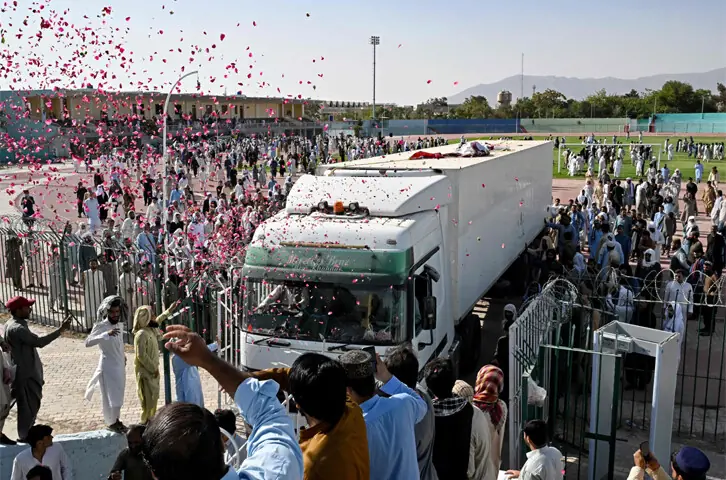
Funeral prayers were held for the policemen martyred in the Ziarat terrorist attack at Quetta's Ayub Stadium on Saturday, attended by thousands. This followed the end of a 10-day sit-in by the victims' relatives, who agreed to disperse after the provincial government accepted their demands, including a judicial probe into the attacks. The agreement also includes renaming public places and institutions after the fallen officers. The attacks, which occurred on July 6 and July 5 respectively, resulted in the deaths of 27 policemen in Ziarat and five civilians in Hanna Urak. In response, security forces conducted Operation Shaban, eliminating 91 terrorists. The Balochistan government has begun implementing the agreement, with Koila Phatak Chowk already renamed Shuhada-i-Ziarat Chowk. Chief Minister Sarfraz Bugti pledged full commitment to the accord, emphasizing the martyrs' sacrifices and the importance of honoring their legacy. The agreement was signed by Health Minister Bukhat Muhammad Kakar and Pashtunkhwa Milli Awami Party Secretary General Abdul Rahim Ziaratwal.
The conclusion of the protest and the subsequent burial of the martyred policemen highlight the immediate aftermath of a significant security incident. The provincial government's swift acceptance of demands, including a judicial inquiry and renaming of public facilities, addresses the families' grief and seeks to restore public trust. This approach, while responsive to immediate public sentiment, raises questions about proactive security measures and the underlying systemic issues that may have contributed to the attacks. The renaming of institutions serves as a symbolic gesture of remembrance, but the long-term effectiveness of such measures in deterring future violence or fostering lasting peace remains to be seen. The government's commitment to implementing the accord will be a critical factor in assessing its ability to manage internal security challenges and uphold the rule of law in the region.
AI-generated to prompt reflection — not editorial opinion, not advice, not a statement of fact. How this works.