Massive 155kg Coral Fish Fetches Nearly $2,300 in Chittagong Market
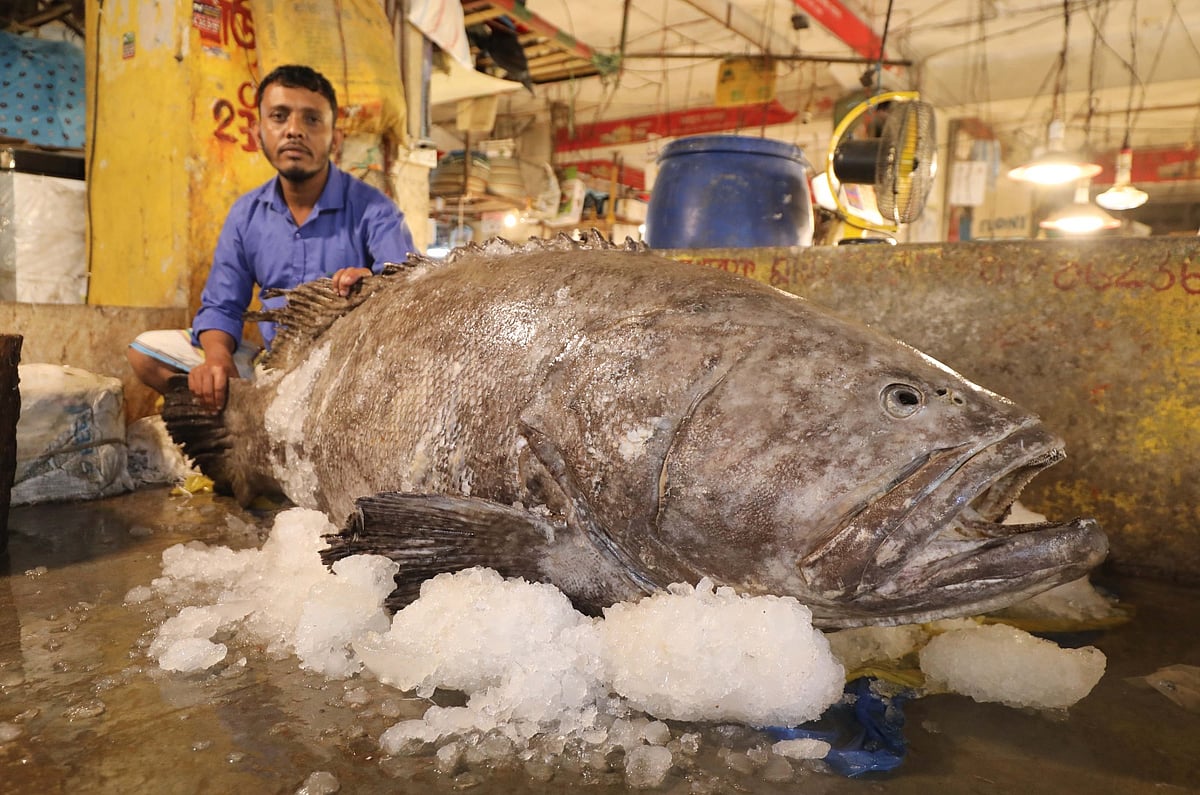
A colossal coral fish weighing 155 kilograms has become the center of attention at the Kazir Deuri market in Chittagong, Bangladesh. The enormous marine creature, displayed on a bed of ice, has drawn crowds of onlookers eager to photograph it and inquire about its weight and price. Fish vendor Mohammad Anwar Hossain brought the fish to the market on Thursday morning. He stated that the fish was caught by a trawler in the sea near the Sundarbans coast before being transported to Chittagong. Hossain mentioned that he had not seen a coral fish of this size since 2019 and expressed his excitement at being able to offer such a specimen to the market after four to five years. He has invited interested buyers to place advance bookings for the fish. The large coral fish is a rare sight in local markets, leading to a significant gathering of people at the market to view it. Hossain plans to cut and sell the fish on Saturday evening, with the price set at 1,500 Bangladeshi Taka per kilogram, bringing the total value of the 155kg fish to 232,500 Taka. The District Fisheries Office described the fish as having a flattened, somewhat round body with dorsal and posterior fins that extend towards the tail, giving it the appearance of having three tails from a distance. It also has a relatively small head and mouth, with brown spots on its body, characteristics similar to the Koi-Coral. However, they refrained from assigning a scientific name without confirmation. Salma Begum, Chittagong District Fisheries Officer, confirmed that coral is one of the most valuable marine fish species in Bangladesh, with many varieties. Based on the images, she believes it belongs to the coral class, possibly a Koi-Coral, and noted it was reportedly caught in the Sundarbans area before arriving at the Chittagong market.
The appearance of an exceptionally large coral fish in the Chittagong market highlights the potential for significant economic value in marine biodiversity. The pricing strategy, reflecting a premium for rarity and size, demonstrates market dynamics driven by consumer curiosity and demand for unique products. From a conservation perspective, the capture of such a large specimen raises questions about sustainable fishing practices in the Sundarbans region and the broader health of marine ecosystems. Future market trends may see increased interest in high-value, rare catches, necessitating robust management frameworks to balance economic opportunities with ecological preservation. Understanding the life cycle and population status of species like this coral fish is crucial for long-term resource management.
AI-generated to prompt reflection — not editorial opinion, not advice, not a statement of fact. How this works.