Massive Fire in Norwegian Residential Area Largely Contained After Destroying Over 100 Homes
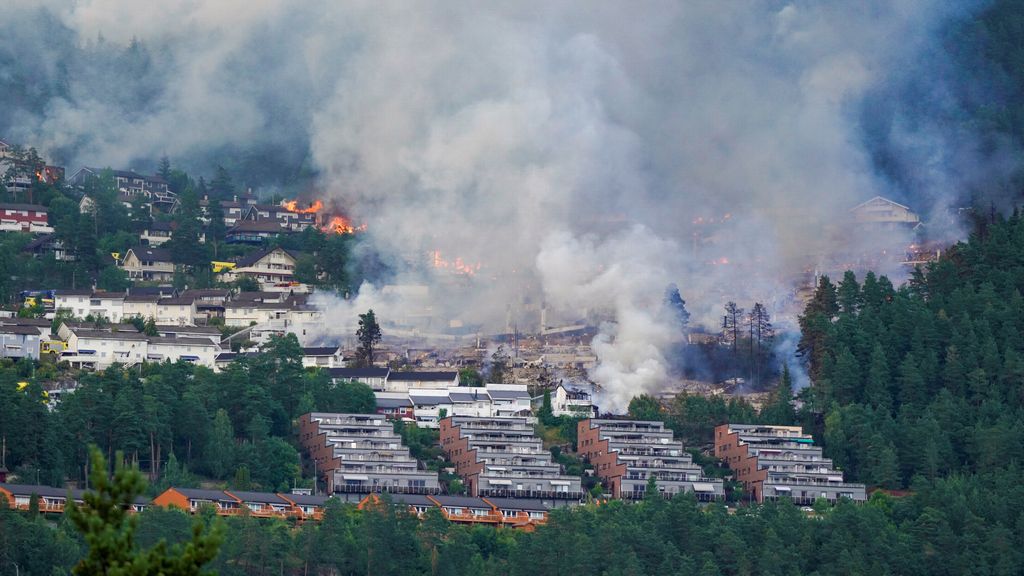
A massive fire in Krokstadelva, Norway, located approximately 50 kilometers west of Oslo, has been largely brought under control. Firefighters are expected to continue extinguishing hotspots throughout the day in both the residential area and surrounding forests. The blaze consumed over one hundred homes, marking one of the most significant fires in a Norwegian inhabited area in over a century, according to Aftenposten. Over four hundred residents were evacuated; some found shelter with friends and family or in hotels in the nearby city and municipality of Drammen, while an official reception center was also established.
The fire ignited yesterday afternoon around 3:30 PM in a terraced house and rapidly spread due to dry and warm weather conditions. The dense housing, dry vegetation, and shifting winds made the fire exceptionally difficult to combat. While the spread within the residential zone has ceased, the fire department indicates that pockets of fire remain in the forest. The devastation is extensive, with one local describing the area as a "ghost town." Norwegian Prime Minister Støre called the event "very gripping" and expressed sympathy for those who lost their homes. Helicopters and over one hundred firefighters were deployed to combat the flames. Rain is forecast for much of today, which may assist firefighting efforts but also carries the risk of lightning, potentially hindering helicopter operations.
This significant fire event in Norway highlights the increasing vulnerability of residential areas to rapid fire spread, particularly in the context of dry weather and dense development. The incident underscores the critical importance of robust urban planning and emergency response infrastructure capable of managing large-scale evacuations and firefighting operations. As climate patterns potentially lead to more frequent extreme weather events, communities will need to adapt by integrating fire-resilient landscaping and building materials, alongside advanced early warning systems. The long-term recovery for the affected residents and the community will depend on effective resource allocation for housing, infrastructure rebuilding, and psychosocial support, while also considering the environmental impact on the surrounding forests.
AI-generated to prompt reflection — not editorial opinion, not advice, not a statement of fact. How this works.