Massive Iceberg Flips Over Near Greenland Coast, Video Goes Viral
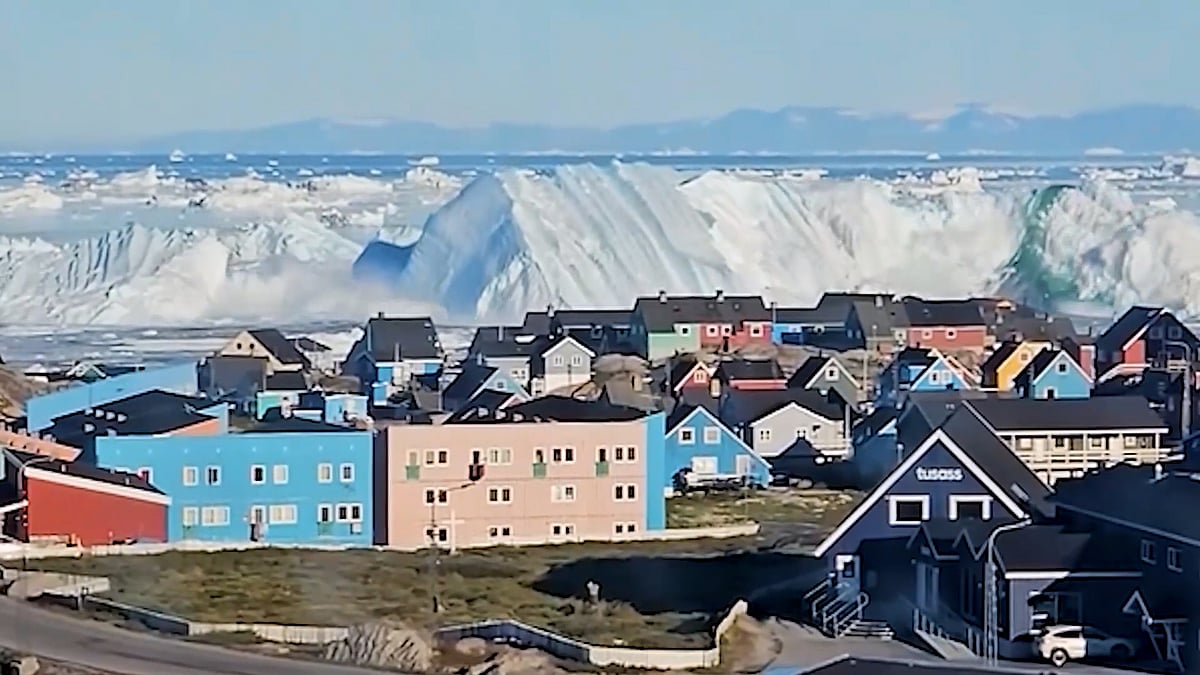
On July 25th, a colossal iceberg, comparable in size to the Titanic, dramatically overturned off the coast of Ilulissat, Greenland. The immense ice formation lost its balance and flipped, creating a significant disturbance in the water. Videos capturing this astonishing event have since circulated widely online, drawing public attention to the dynamic nature of glacial environments. The incident occurred in the vicinity of Ilulissat, a town known for its proximity to the Ilulissat Icefjord, a UNESCO World Heritage site. This natural phenomenon highlights the constant movement and instability inherent in large ice masses. The visual evidence shared through viral videos offers a stark reminder of the powerful forces at play in Arctic regions. Further details regarding the specific circumstances leading to the iceberg's instability were not provided in the initial report.
The dramatic overturning of large icebergs, often referred to as 'calving' or 'rogue wave' events, is a visual manifestation of complex physical processes driven by melting and water displacement. Such occurrences underscore the dynamic equilibrium of glacial systems, which are increasingly influenced by rising global temperatures. While visually striking, these events are indicative of broader climate shifts impacting polar regions. Understanding the frequency and scale of these phenomena is crucial for predicting sea-level rise and coastal impacts. The viral nature of the footage suggests a growing public interest in climate change impacts, prompting a need for clear, science-based communication about these environmental transformations.
AI-generated to prompt reflection — not editorial opinion, not advice, not a statement of fact. How this works.