Massive Sargassum Seaweed Blooms Choke Caribbean and Mexican Coastlines
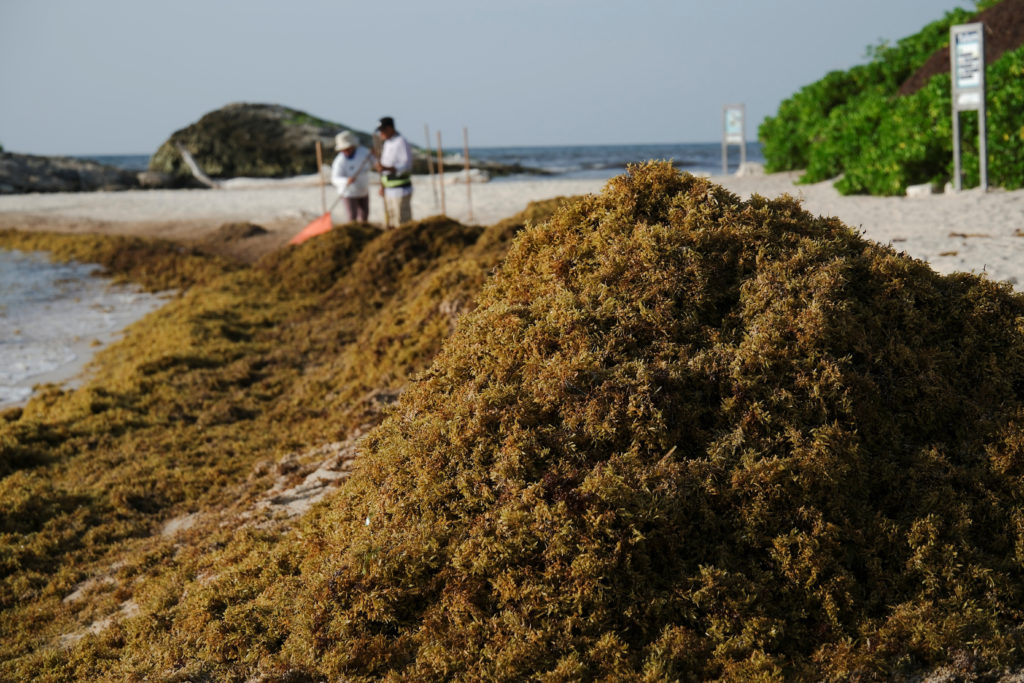
An immense quantity of sargassum seaweed, estimated at 27 million metric tons, has blanketed the Atlantic, Caribbean, and Gulf of Mexico as of July. This self-sustaining seaweed bloom poses a significant environmental challenge to coastal regions stretching from the Caribbean islands down to Mexico. The scale of the problem was detailed in a report released on Friday by the University of South Florida's Optical Oceanography Lab. These vast mats of algae are not only visually disruptive but also threaten marine ecosystems and coastal economies. Their accumulation can lead to oxygen depletion in the water, harming fish and other sea life, and can also damage coral reefs. Furthermore, the decomposition of such large volumes of seaweed releases hydrogen sulfide gas, which can be detrimental to human health and corrode infrastructure. Coastal communities are grappling with the economic impact on tourism and fishing industries, as well as the costs associated with cleanup efforts. Scientists are investigating the causes of these unprecedented blooms, with factors such as changing ocean currents, increased nutrient runoff from land, and rising ocean temperatures due to climate change being considered potential contributors. The long-term implications for the region's biodiversity and economic stability are a growing concern.
The widespread sargassum blooms represent a complex ecological and economic challenge, likely exacerbated by anthropogenic climate change and altered nutrient cycles. The sheer volume suggests a systemic issue rather than isolated incidents, impacting marine biodiversity, coastal infrastructure, and regional economies dependent on tourism and fishing. Future management will require integrated approaches addressing both the immediate cleanup and the underlying causes, potentially involving international cooperation on nutrient management and climate mitigation strategies. The recurring nature of these blooms necessitates proactive, long-term planning to build resilience in affected coastal communities and ecosystems.
AI-generated to prompt reflection — not editorial opinion, not advice, not a statement of fact. How this works.