Mato Grosso Court of Accounts Investigates BR-163 Highway Duplication Contract
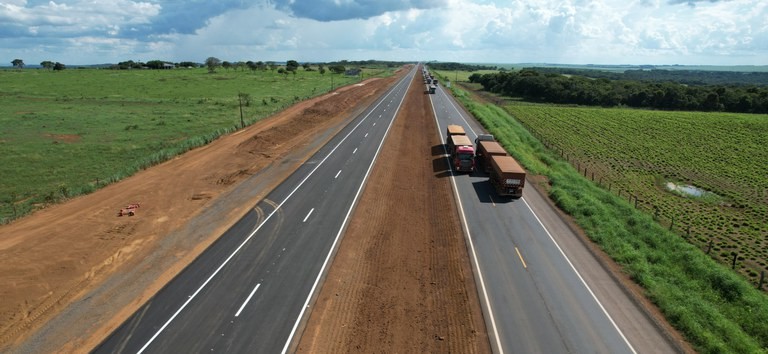
The Court of Accounts of Mato Grosso (TCE-MT) has initiated an investigation into the contract for the duplication of the BR-163 highway, managed by Concessionária Rota do Oeste. The inquiry was prompted by a complaint from Agrimat Engenharia e Empreendimentos Ltda., part of the Consórcio Rodovia dos Imigrantes, which was responsible for executing a portion of the works. Agrimat alleges that flaws in the project design provided by the concessionaire led to additional costs exceeding R$ 68 million. According to Agrimat, the original project underestimated the amount of reusable materials, forcing the use of external sources and increasing transportation distances. Rota do Oeste, in its defense, argued that the TCE-MT lacks jurisdiction, stating the dispute concerns the contract's economic balance, not public management irregularities, and should be handled by the Canada-Brazil Chamber of Commerce. However, TCE-MT councilor Guilherme Antonio Maluf rejected this, asserting that Rota do Oeste, controlled by MT Par (a mixed-economy company linked to the Mato Grosso government), is subject to the court's oversight. Maluf clarified that the TCE's focus is on potential irregularities in contract management and public fund allocation, not on Agrimat's financial claims. The case has been forwarded to the TCE-MT's External Control Secretariat for Infrastructure Works for further investigation and technical analysis.
The investigation into the BR-163 highway duplication contract highlights potential systemic issues in infrastructure project management and oversight. The dispute over project design flaws and cost overruns, involving a private concessionaire and a state-affiliated entity, underscores the complexities of public-private partnerships. The TCE-MT's assertion of jurisdiction, despite the concessionaire's arguments, emphasizes the state's role in safeguarding public funds and ensuring contractual integrity. This situation prompts consideration of contractual frameworks that better anticipate and manage unforeseen site conditions and design discrepancies to prevent disputes and ensure efficient resource allocation, particularly as Brazil continues to invest in critical infrastructure. The case also raises questions about the clarity of responsibilities and dispute resolution mechanisms within such large-scale projects.
AI-generated to prompt reflection — not editorial opinion, not advice, not a statement of fact. How this works.