Medieval Arthurian Manuscript Fetches Over $3 Million at Auction
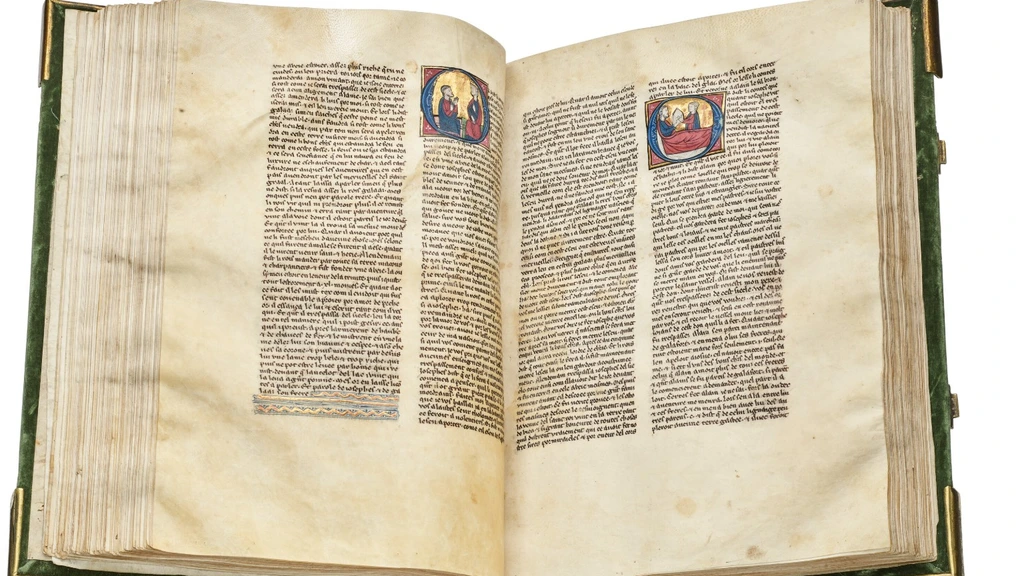
A medieval manuscript detailing stories of King Arthur, Merlin, and the Knights of the Round Table has sold for 2.24 million British pounds (over 2.6 million euros) at Christie's auction house in London. This sale met the higher end of its estimated value, which ranged from 1.5 to 2 million pounds. The manuscript, known as the Clermont-Tonnerre Grail, was created between 1290 and 1310 and had remained in private ownership for approximately seven centuries. Christie's noted it was one of only three comparable manuscripts still in private hands, and it is the oldest and most richly illustrated of the three.
The manuscript features 126 miniatures, which are hand-painted, colored illustrations adorning the text and depicting story scenes. These miniatures are embellished with gold leaf and precious pigments, including a rare depiction of Merlin as a stag. Dr. Martine Meuwese, a university lecturer in medieval art at Utrecht University, described the illustrations as a "feast" to view online, noting the manuscript's beautiful handwriting, "striking, bright colors," and "cartoon-like figures." She highlighted the immense popularity of Arthurian literature in the Middle Ages, calling it a "bestseller" with around two hundred copies surviving today. Meuwese explained that such manuscripts were costly endeavors, involving specialized artisans for parchment, text, and illustrations, making them accessible only to wealthy patrons.
The buyer's identity has not been disclosed, which has raised concerns among researchers. Meuwese expressed hope that the manuscript will eventually enter a public collection for scholarly study and public access. However, she acknowledged that this is unlikely, as European museums often lack the immediate funds to acquire such high-value items.
The sale of this 700-year-old Arthurian manuscript highlights the enduring market value of historical artifacts and illuminated manuscripts, driven by rarity, artistic merit, and cultural significance. While the auction achieved a strong price, the subsequent concern over its private acquisition underscores a systemic tension between private ownership and public access to cultural heritage. The high cost of such items, as noted by Dr. Meuwese, presents a significant barrier for public institutions, potentially leading to valuable historical works being sequestered from scholarly research and public appreciation. This situation prompts consideration of innovative funding models or international consortia for cultural acquisitions to ensure broader access to historically significant materials in the long term, especially as digital access, while valuable, cannot fully replicate the experience or research potential of direct engagement with original artifacts.
AI-generated to prompt reflection — not editorial opinion, not advice, not a statement of fact. How this works.