Men Assault Alligator in Cuiabá Park to Remove It; Officials Say It Will Stay
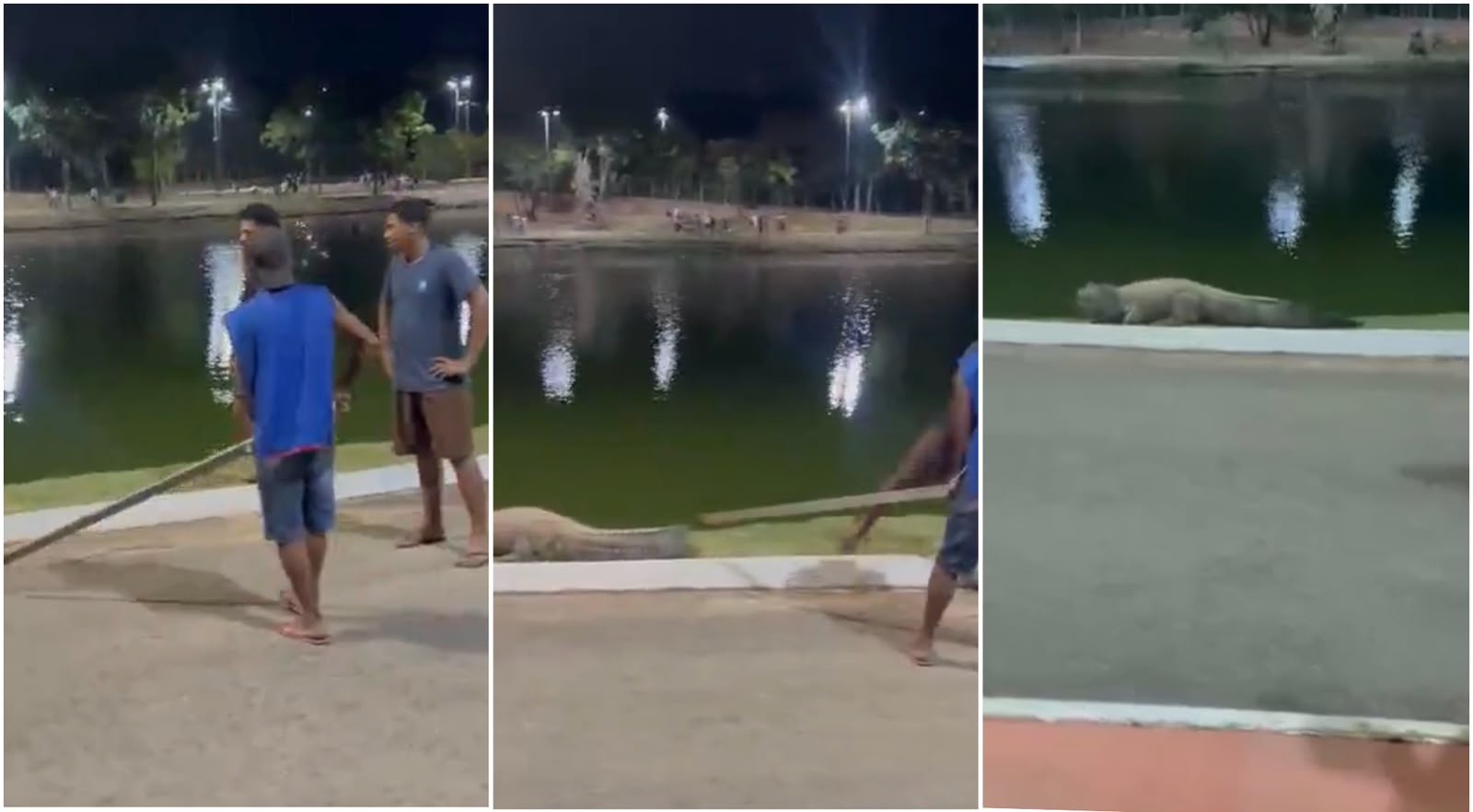
A video circulating online shows three men attempting to drive away an alligator, known locally as "Celso," from the Parque das Águas in Cuiabá, Mato Grosso, Brazil, using a piece of wood. The incident, recorded by park visitors, has drawn criticism on social media regarding the treatment of the animal. One man is seen approaching the reptile and touching it with the wood in an effort to make it leave the area. The alligator lifts its head but does not react aggressively and remains in place. The Municipality of Cuiabá has issued a statement clarifying that there is no intention to remove the animal from the park. "Celso" is a familiar sight to residents of Cuiabá, often seen near the park's walking path, where it has lived for years. Despite frequent encounters with visitors, there are no records of the alligator attacking people in the park. In July, the alligator was observed peacefully coexisting with a group of capybaras within the park. Wildlife experts emphasize that people should never attempt to touch, provoke, or scare wild animals. Disturbing wildlife is a crime under Brazil's Environmental Crimes Law (Article 29, Law No. 9.605/98), punishable by detention and a fine, with penalties proportional to the severity of the offense. The recommended procedure when encountering a wild animal in a public area is to maintain distance and contact the responsible environmental authorities, avoiding any personal intervention.
The incident highlights a common human tendency to assert control over wildlife encroaching on shared spaces, often driven by fear or a desire to maintain human-centric environments. While the actions of the individuals were reportedly intended to remove the alligator, they contravened established protocols for wildlife interaction and potentially endangered both themselves and the animal. The municipality's response, affirming the alligator's right to remain and emphasizing expert guidance, aligns with conservation principles that advocate for coexistence and responsible management of urban wildlife. This situation underscores a broader societal challenge: balancing human development and recreation with the preservation of biodiversity in increasingly shared ecosystems. Future strategies may involve enhanced public education on wildlife behavior and legal protections, alongside improved park infrastructure to minimize human-animal conflict and ensure the safety and well-being of both species.
AI-generated to prompt reflection — not editorial opinion, not advice, not a statement of fact. How this works.