Mercury Reaches Greatest Western Elongation on August 2
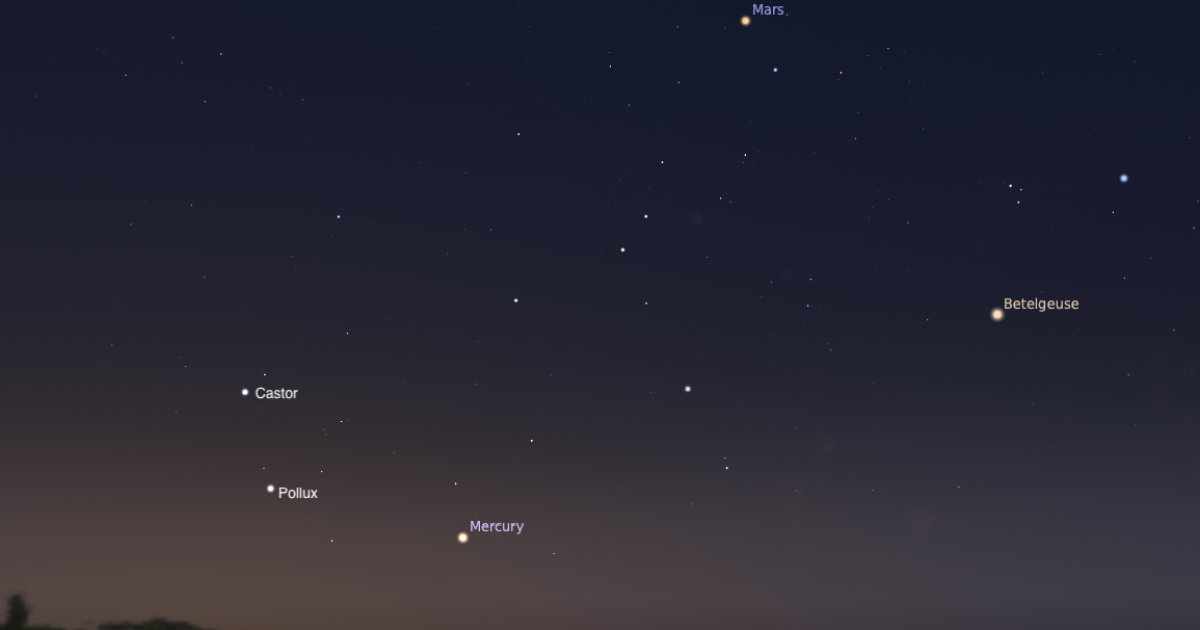
On Sunday, August 2, Mercury will achieve its greatest western elongation, appearing 19 degrees away from the Sun at 4 A.M. EDT. This celestial event offers an opportunity to observe the planet in the pre-dawn sky. An hour before sunrise, Mercury will be visible approximately 5 degrees above the eastern horizon. It will shine with a magnitude of 0.2, making it a relatively bright object for observation. For those interested in further astronomical events, a detailed "Sky This Week" column is available. Additionally, on August 1, the open cluster NGC 6709 will be a notable sight. This information was originally published by Astronomy Magazine.
This astronomical observation highlights a predictable planetary alignment, offering a recurring opportunity for skywatchers. The event's significance lies in its visibility, dependent on atmospheric conditions and local time. From a systemic perspective, such celestial mechanics are governed by orbital dynamics, demonstrating consistent patterns within our solar system. The public's engagement with these events reflects an enduring human curiosity about the cosmos and our place within it. As technology advances, tools for observing and understanding these phenomena become more accessible, potentially fostering broader scientific literacy and appreciation for celestial mechanics.
AI-generated to prompt reflection — not editorial opinion, not advice, not a statement of fact. How this works.