Mercury's Magnetic Field Periodically Captures Solar Wind
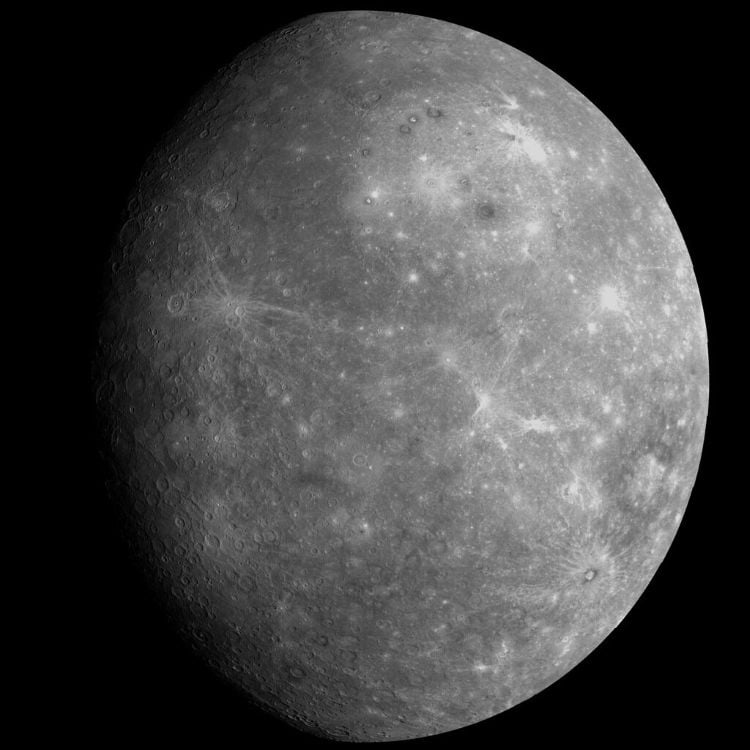
Mercury, the planet closest to the Sun, possesses a magnetic field that scientists discovered in March 1974. This finding surprised and puzzled researchers due to Mercury's relatively small size, approximately half that of the continental United States. Despite limited spacecraft missions to the planet, the data gathered has revealed previously unexpected characteristics. A key discovery is that Mercury's weak magnetic field can periodically trap solar wind. This phenomenon challenges earlier assumptions about planetary magnetic fields and their interactions with stellar radiation.
The discovery of Mercury's magnetic field and its interaction with solar wind highlights the complexity of planetary magnetospheres, even for smaller celestial bodies. This finding prompts a re-evaluation of models predicting magnetic field strength and behavior, suggesting that size alone may not be the sole determinant of a planet's ability to generate and sustain a protective magnetic shield. Future research could explore the specific mechanisms enabling this periodic trapping, potentially revealing novel insights into plasma physics and space weather dynamics relevant to other planets and even exoplanets. Understanding these interactions is crucial for assessing planetary habitability and the long-term evolution of planetary environments in the solar system and beyond.
AI-generated to prompt reflection — not editorial opinion, not advice, not a statement of fact. How this works.