Merz: Democracy Must Prove Itself Anew
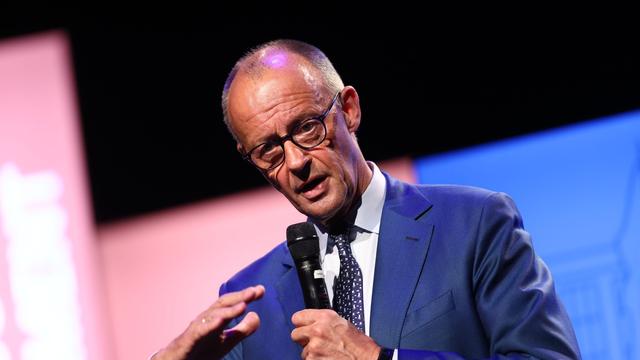
Friedrich Merz, the leader of Germany's Christian Democratic Union (CDU), delivered a speech in Cologne where he asserted that democracy must prove itself anew. He emphasized the challenges facing democratic systems in the current era. Merz's remarks highlighted the need for democratic institutions to adapt and demonstrate their relevance and effectiveness in the face of evolving societal and political landscapes. The speech, delivered in Cologne, touched upon the critical juncture at which democratic governance finds itself. Merz's call suggests a recognition of potential vulnerabilities and the imperative for proactive measures to strengthen democratic foundations. The CDU leader's address underscored the ongoing struggle to maintain and enhance democratic principles amidst contemporary pressures. He indicated that the resilience and adaptability of democracy are paramount for its continued success and legitimacy. The specific context of his remarks in Cologne points to a regional or national focus on these democratic challenges. Merz's statement serves as a call to action for democratic societies to actively engage in self-reflection and renewal.
Friedrich Merz's statement that democracy must prove itself anew reflects a broader global concern regarding the efficacy and resilience of democratic governance in the 21st century. This sentiment arises from a confluence of factors including the rise of digital information ecosystems, which can foster polarization and the spread of disinformation, and evolving geopolitical pressures. Democratic systems face the inherent challenge of balancing individual freedoms with collective security and economic stability, a tension that is amplified by rapid technological change and global interconnectedness. The imperative for democratic institutions is to demonstrate tangible benefits to citizens, foster inclusive participation, and adapt governance structures to be more responsive and agile. Failure to do so could lead to a decline in public trust and an increased susceptibility to authoritarian alternatives. The coming decade will likely test the adaptability of democratic models as they navigate the complexities of artificial intelligence, climate change, and shifting global power dynamics.
AI-generated to prompt reflection — not editorial opinion, not advice, not a statement of fact. How this works.