Merz Expresses Strong Regret Over Prolonged Uncertainty Regarding Schnieder's Position
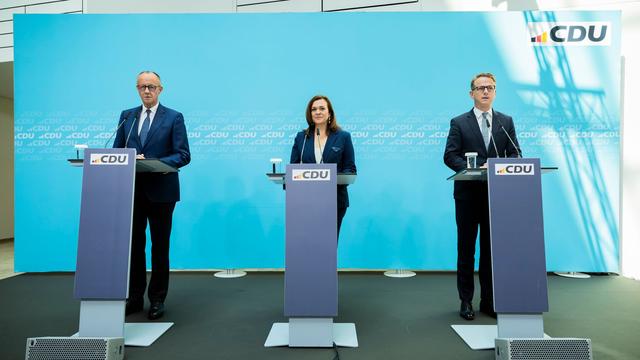
Friedrich Merz, the leader of the Christian Democratic Union (CDU), has voiced significant regret over the extended period of uncertainty surrounding the political future of Thomas Schnieder. Schnieder's position had been the subject of a prolonged "Hängepartie," a German term indicating a drawn-out, indecisive situation. Merz's statement suggests that this prolonged indecision has been detrimental and has caused considerable frustration within the party or political sphere. The specific details of Schnieder's role or the reasons for the uncertainty were not elaborated upon in the provided text. However, Merz's strong expression of regret indicates a desire for swift decision-making and a stable political environment. This situation may have implications for party cohesion and public perception of the CDU's ability to manage internal affairs efficiently. The focus of Merz's statement is on the negative impact of the delay itself, rather than on the specifics of Schnieder's case.
The prolonged uncertainty surrounding Thomas Schnieder's political position, as highlighted by Friedrich Merz's strong regret, points to potential challenges in governance and internal party decision-making processes. Such delays can create instability, impacting public trust and the efficient allocation of political resources. From a systems perspective, extended indecision may reflect underlying structural issues within the party's or government's operational framework, potentially hindering strategic planning and responsiveness to evolving political landscapes. Moving forward, a focus on streamlined decision-making protocols and clear communication channels could enhance political stability and operational effectiveness, aligning with the need for agile governance in the current era.
AI-generated to prompt reflection — not editorial opinion, not advice, not a statement of fact. How this works.