Messi, Maradona, or Pelé: Who is Football's Greatest Player?
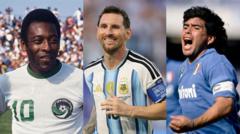
Lionel Messi, at 39 years old, remains a crucial part of Argentina's 2026 FIFA World Cup campaign. This ongoing involvement raises the perennial question of whether he has surpassed his compatriots Diego Maradona and Brazil's Pelé in the pantheon of football's greatest players. The debate centers on their respective achievements, impact on the sport, and longevity at the highest level. Messi's continued performance in major tournaments keeps him firmly in contention for this esteemed title. His career achievements are extensive, including numerous individual awards and team trophies. Maradona is legendary for his iconic performances, particularly leading Argentina to World Cup victory in 1986. Pelé, a three-time World Cup winner with Brazil, is often cited for his prolific goal-scoring record and pioneering global appeal. The comparison involves assessing different eras and styles of play. Ultimately, determining the single greatest player remains a subjective and passionately debated topic among football enthusiasts worldwide.
The enduring debate over football's greatest player, often pitting Messi, Maradona, and Pelé against each other, highlights the subjective nature of legacy assessment in sports. While statistical achievements and major tournament wins are quantifiable, factors like historical context, cultural impact, and the evolution of the game itself introduce complexities. Messi's sustained excellence into his late thirties, participating in a 2026 World Cup campaign, demonstrates remarkable longevity and adaptability, a trait increasingly valued in the modern era. This longevity challenges traditional metrics that might favor players from earlier eras with different competitive landscapes. The discussion serves as a lens to examine how different generations of athletes redefine greatness within their evolving sporting environments, prompting reflection on what criteria truly define a player's ultimate standing.
AI-generated to prompt reflection — not editorial opinion, not advice, not a statement of fact. How this works.