Meteorite pierces New Jersey home's roof, carrying potential signs of life
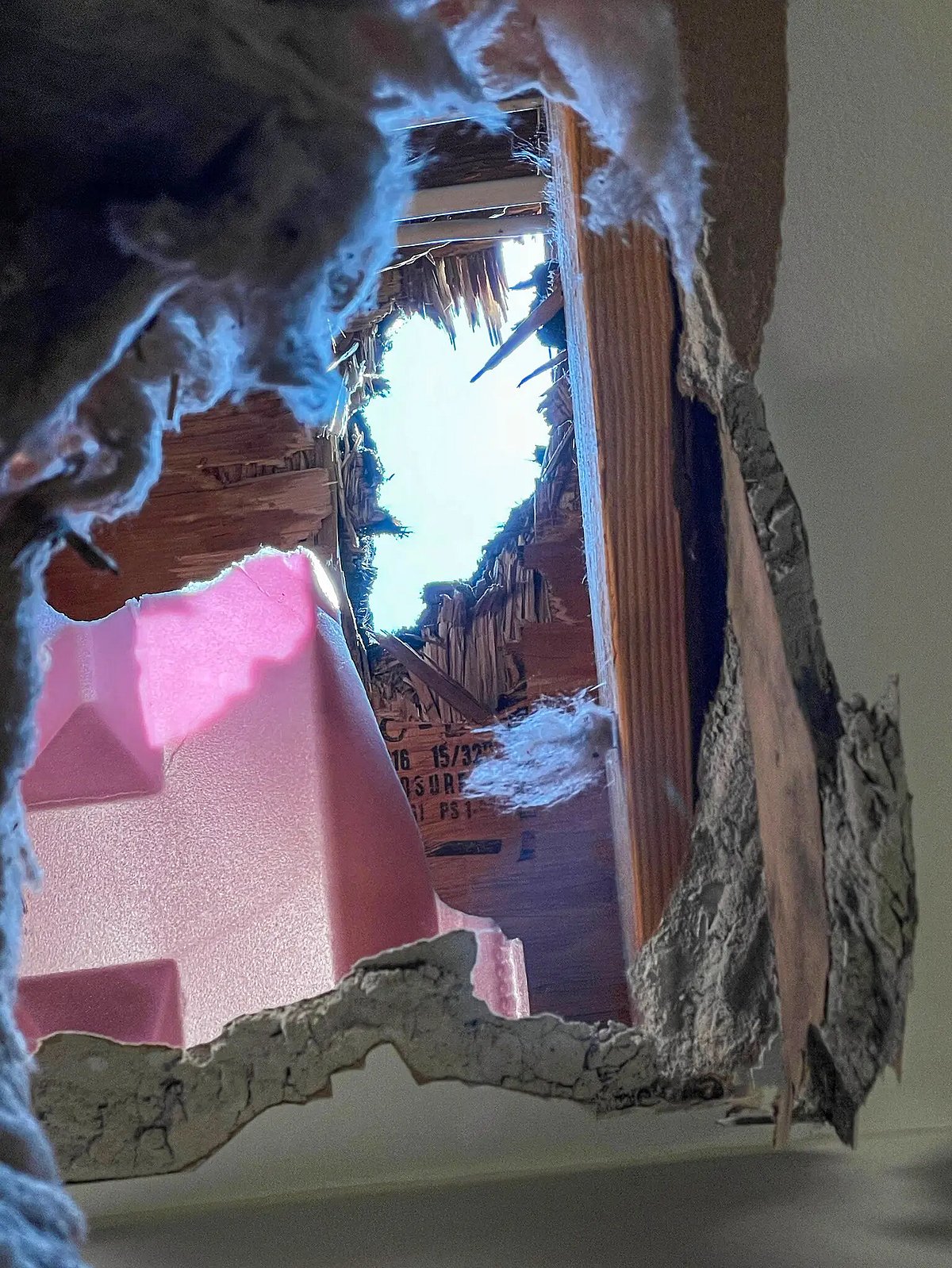
On July 16, 2024, a meteorite, initially estimated to be about one foot in size, entered Earth's atmosphere at high speed, creating a bright fireball and sonic boom audible across several northeastern US states. NASA had predicted that such a small object would likely burn up completely due to atmospheric friction. However, a couple in Hillsborough, New Jersey, reported a loud impact and discovered a hole in their bedroom ceiling. Inside their home, they detected a sulfurous odor and found black fragments and dust on their belongings. Scientists estimate the meteorite weighed approximately 115 pounds before entering the atmosphere, with most of it burning off during its descent at speeds around 32,000 miles per hour. A significant fragment survived and struck the house. The couple meticulously collected about three pounds of these cosmic fragments over several weeks, preserving them in near-pristine condition before handing them over to scientists. This discovery remained secret for two years until a study published in Science Advances on July 8 revealed the meteorite contains complex organic molecules and clear chemical signatures of saltwater, both crucial for life. Scientists theorize that such asteroids may have delivered essential elements for life to Earth in its early stages. The meteorite has been identified as a CM chondrite, one of the oldest types, retaining its original chemical composition from the solar system's formation. This particular fragment is believed to have originated from a larger asteroid that broke apart approximately 155 million years ago, with this piece separating about 6 million years ago before embarking on a journey that led it to Earth roughly 200,000 years ago. The successful recovery of such a large, fragile piece intact is considered exceptionally rare, especially given that many similar meteorites are often degraded by Earth's environment before they can be scientifically analyzed. The couple, who had recently purchased the home, sustained minimal damage beyond roof repairs.
The recovery of a meteorite containing complex organic molecules and saltwater signatures offers a rare glimpse into the early solar system and the potential delivery mechanisms for life's building blocks to Earth. The meticulous preservation of the specimen by the homeowners highlights the critical importance of rapid and careful collection of extraterrestrial materials to maintain their scientific integrity. This event underscores the ongoing scientific value of meteorite research in understanding planetary formation and astrobiology, prompting further investigation into the composition and origins of such celestial bodies. The rarity of finding such a fragile object intact also emphasizes the role of chance and environmental factors in scientific discovery, suggesting that future missions and ground-based recovery efforts should prioritize speed and preservation techniques to maximize the scientific yield from such extraordinary events.
AI-generated to prompt reflection — not editorial opinion, not advice, not a statement of fact. How this works.