Mice Survive Extreme Conditions on Toxic Plants on Chilean Volcanoes
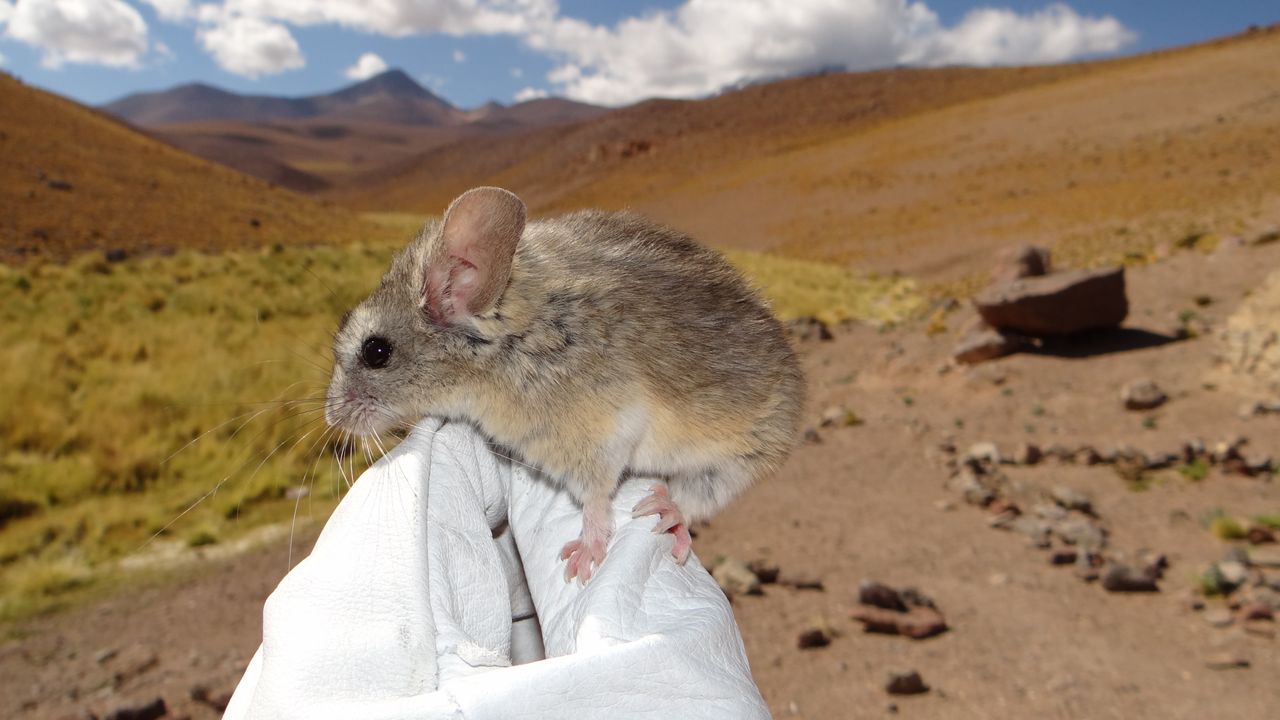
Researchers have documented the remarkable survival strategies of Andean leaf-eared mice inhabiting the Puna de Atacama volcanoes in Chile. These mice have adapted to live on 'godforsaken' frozen volcanic peaks, an environment described as 'not remotely compatible with long-term human survival.' To endure these harsh conditions, the mice have resorted to consuming toxic plants. The study involved researchers undertaking significant personal risk to investigate these unique creatures on the inhospitable volcanic terrain. The findings highlight the extreme adaptability of life and the surprising ways species can find sustenance in seemingly uninhabitable environments.
This research highlights the extraordinary resilience of life in extreme environments, demonstrating how species can adapt to conditions that would be lethal to humans. The mice's reliance on toxic plants for survival underscores the complex ecological relationships and evolutionary pressures at play. From a systems perspective, this case offers insights into the potential for life to exist in extraterrestrial environments with similar extreme conditions. Understanding these adaptive mechanisms could inform future astrobiological research and our definition of habitability, while also prompting consideration of the long-term ecological impacts of climate change on biodiversity in vulnerable regions.
AI-generated to prompt reflection — not editorial opinion, not advice, not a statement of fact. How this works.