Michael Jackson's 'They Don't Care About Us' video house in Salvador faces closure
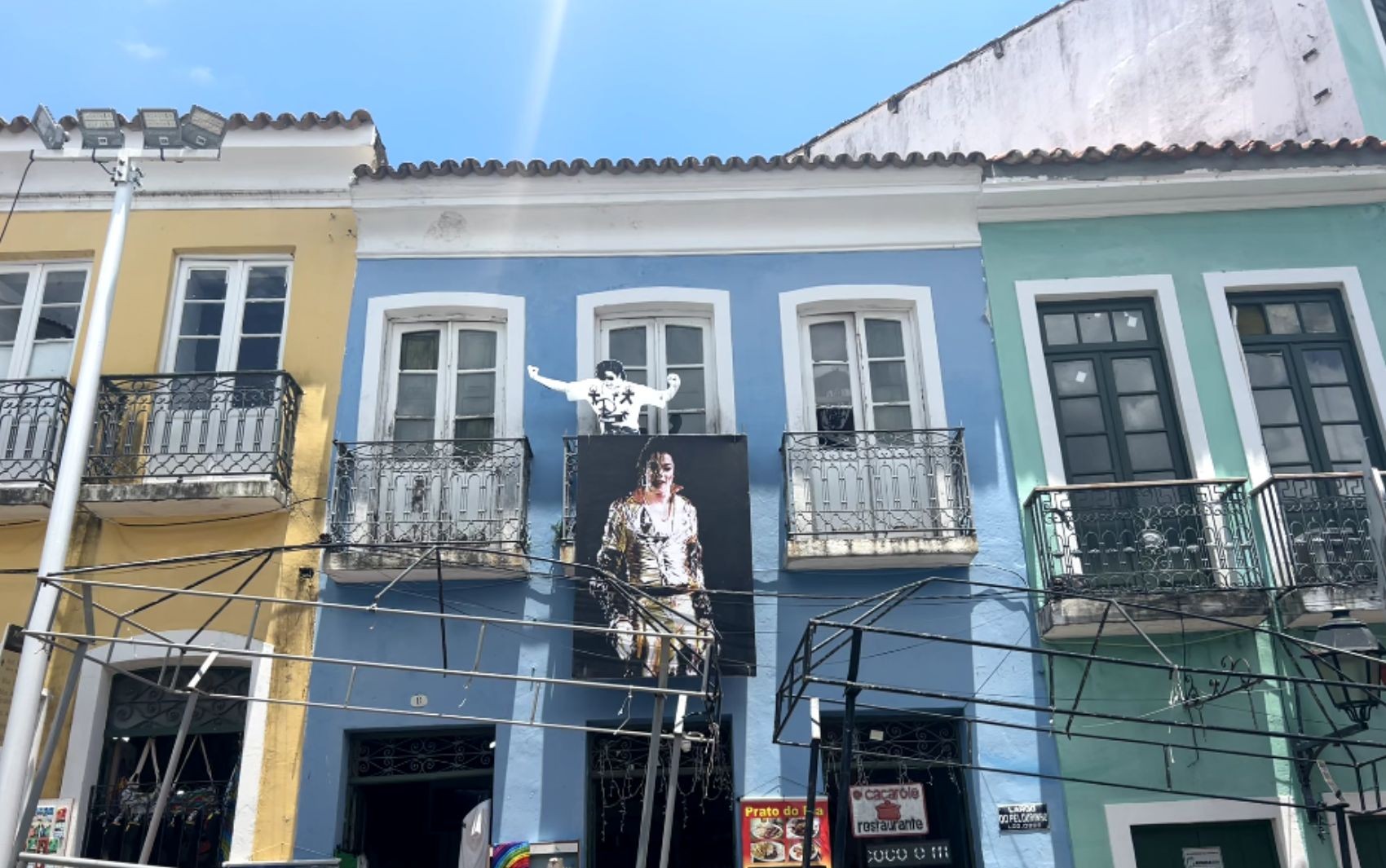
A historic colonial mansion in Salvador's Pelourinho, famous for its appearance in Michael Jackson's 1996 music video for "They Don't Care About Us," is at risk of losing its status as a tourist attraction. The building, which features a distinctive blue facade and a prominent balcony, has become a must-visit spot for international tourists, even 30 years after the video's filming. The ground floor houses a restaurant and a souvenir shop selling Michael Jackson-themed merchandise, operated by Carlos Alberto dos Santos for the past 17 years. Tourists continue to flock to the site for photos, despite the balcony being closed to visitors due to structural issues identified by the Salvador Civil Defense (Codesal). Inspections in July 2023 revealed cracks, humidity stains, exposed metal reinforcement, and a partially destroyed upper floor. While some repairs have been made, Codesal noted persistent irregularities requiring owner intervention, though it stated there is no immediate risk of collapse. Adding to the uncertainty, the tenant responsible for preserving the site's connection to Jackson has been legally ordered to vacate the property by May 23rd. He claims to have occupied the space rent-free with the owner's permission, and his defense states the legal process is ongoing. The property's status as a tourist draw significantly increased after Jackson's death in 2009, when visitors began requesting access to the balcony featured in the video.
The confluence of structural integrity concerns and a legal dispute over property occupation presents a complex challenge for the future of this culturally significant site. While the Civil Defense has assessed the building's condition as not posing an imminent collapse risk, ongoing structural issues necessitate investment from the property owner. Simultaneously, the legal eviction of the long-term tenant, who has cultivated the location's tourist appeal, raises questions about property rights, heritage preservation, and the economic models supporting cultural landmarks. The situation highlights the delicate balance between maintaining historical structures, managing property disputes, and capitalizing on cultural tourism in a way that benefits both the community and the site's long-term viability. Future considerations may involve exploring public-private partnerships or heritage protection designations to ensure the site's preservation and continued accessibility.
AI-generated to prompt reflection — not editorial opinion, not advice, not a statement of fact. How this works.