MicroPython Brings Modern Python Capabilities to the SNES
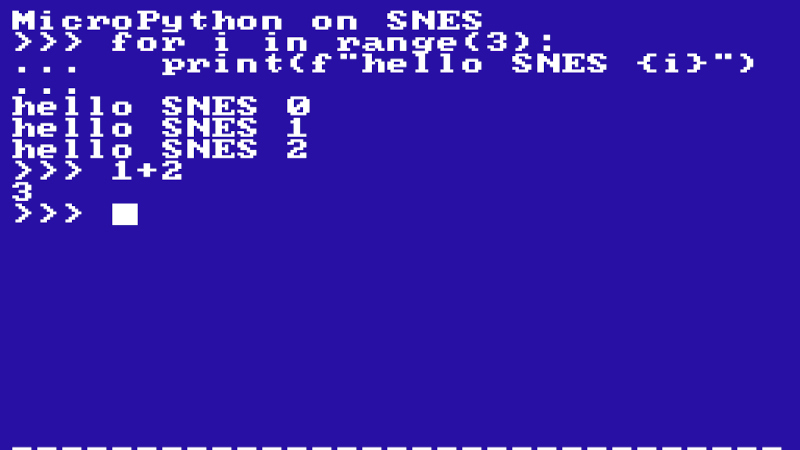
MicroPython, a streamlined version of the Python programming language designed for microcontrollers, is being adapted for the Super Nintendo Entertainment System (SNES). This development allows for modern programming techniques to be utilized on the classic console, which was originally released in the early 1990s. The project, spearheaded by Claude Fable, aims to leverage the capabilities of MicroPython to enhance what is possible on the SNES hardware. While the SNES was powerful for its era, it is significantly less capable than modern microcontrollers that typically run MicroPython. The adaptation signifies an effort to bridge the gap between retro gaming hardware and contemporary software development tools. This initiative could potentially open new avenues for homebrew game development and experimentation on the SNES platform. Further details on the specific features and limitations of this MicroPython implementation for the SNES are expected.
This development highlights the enduring appeal of retro gaming hardware and the ingenuity of the homebrew community in extending the lifespan and capabilities of older systems. By porting MicroPython, developers are essentially enabling more complex and modern programming paradigms on a platform designed decades ago. This trend reflects broader technological shifts, where the lines between specialized hardware and general-purpose computing blur, and where software innovation can breathe new life into established platforms. The long-term implications may involve a deeper exploration of the SNES's latent potential, potentially influencing future retro-inspired development or even inspiring new approaches to embedded systems design by demonstrating the flexibility of even resource-constrained hardware when paired with advanced software tools.
AI-generated to prompt reflection — not editorial opinion, not advice, not a statement of fact. How this works.