Microsoft CEO Satya Nadella: AI Costs Users Twice, Once in Money, Once in Data
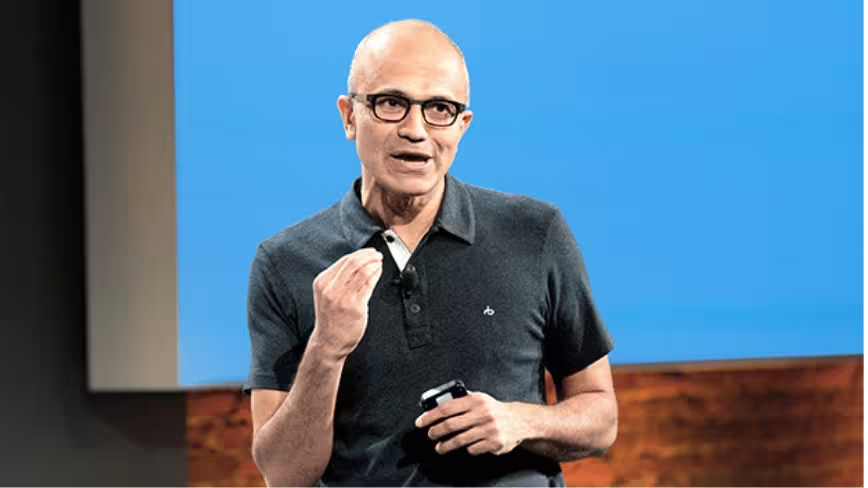
Microsoft CEO Satya Nadella has stated that companies utilizing artificial intelligence are effectively paying for it twice. The first payment is a direct financial cost, while the second involves surrendering sensitive data to make AI tools functional and effective. Nadella has termed this phenomenon the 'Reverse Information Paradox'. He acknowledges that Microsoft, the company he leads, has played a significant role in developing the systems that create this situation. This dual cost structure presents a considerable warning for businesses investing in AI technologies. The reliance on data for AI functionality creates a complex dynamic where valuable information is exchanged for computational power and insights. Nadella's comments highlight the inherent trade-offs involved in adopting advanced AI solutions. Businesses must carefully consider both the monetary expenses and the data privacy implications when integrating AI into their operations. The 'trap' he refers to suggests a potential long-term vulnerability or dependency created by this data exchange.
The 'Reverse Information Paradox' articulated by Satya Nadella points to a fundamental economic and data governance challenge inherent in current AI development models. While AI offers significant productivity gains, its reliance on vast datasets for training and operation creates a tension between utility and data sovereignty. Companies must weigh the immediate benefits of AI against the long-term implications of data exfiltration and the potential for dependency on third-party AI providers. Future governance frameworks will likely need to address this duality, exploring models that allow for AI advancement without compromising data privacy or creating systemic risks through concentrated data ownership. The incentive structures driving AI development currently favor data aggregation, necessitating a re-evaluation to foster more decentralized and privacy-preserving AI ecosystems.
AI-generated to prompt reflection — not editorial opinion, not advice, not a statement of fact. How this works.