Microsoft President: US AI Regulation Lacks Clarity, Harming Industry
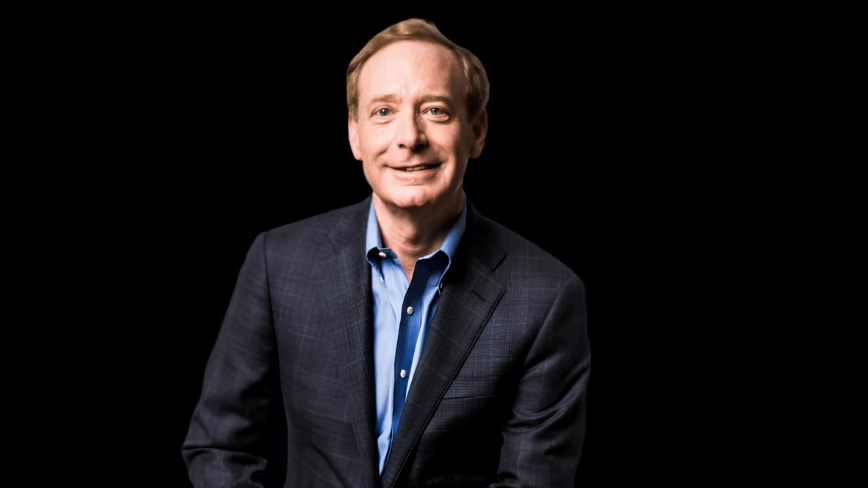
Microsoft President Brad Smith has stated that the United States is currently regulating artificial intelligence without a clear and accessible set of rules. He expressed concern that this regulatory uncertainty poses a significant problem for the entire AI industry. Smith articulated these points to Fortune magazine during the AI for Good Global Summit. He highlighted that the existing regulatory landscape lacks transparency and is difficult for stakeholders to understand. This ambiguity, according to Smith, hinders the industry's ability to innovate and comply effectively. The lack of defined guidelines creates an environment of unpredictability, making it challenging for companies to invest in and develop AI technologies responsibly. The situation underscores a broader challenge in rapidly evolving technological fields where policy often struggles to keep pace with innovation.
AI Governance Analysis: The current US approach to AI regulation, as described by Microsoft's Brad Smith, appears to be characterized by a lack of transparent and readable rules. This situation presents a dilemma: rapid technological advancement necessitates agile governance, yet effective regulation requires clear, predictable frameworks. The tension between fostering innovation and ensuring responsible development is a critical challenge. From a systems perspective, unclear regulations can lead to market inefficiencies, stifle investment due to uncertainty, and potentially create uneven playing fields. Over the next decade, as AI becomes more integrated into critical infrastructure and daily life, the need for robust, understandable, and globally coordinated regulatory approaches will only intensify. Future policy will need to balance the imperative for innovation with the societal need for safety, fairness, and accountability, potentially through adaptive regulatory sandboxes or international standard-setting bodies.
AI-generated to prompt reflection — not editorial opinion, not advice, not a statement of fact. How this works.