Migrant crisis at Ceuta exposes EU solidarity cracks
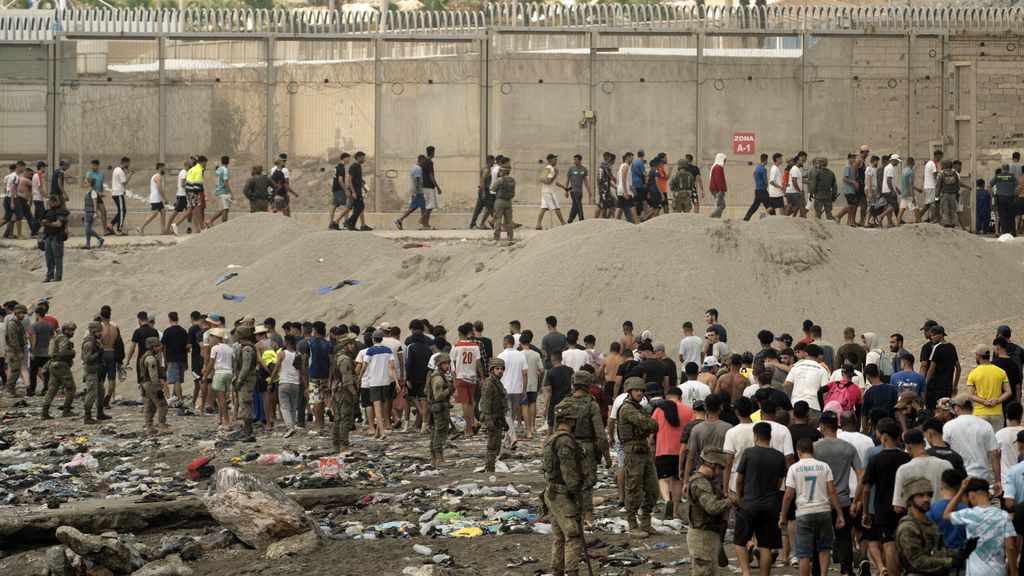
Tens of thousands of migrants who entered the Spanish exclave of Ceuta have highlighted not only the vulnerability of Europe's external borders but also how quickly solidarity among EU member states can falter under pressure. An emergency meeting of EU ambassadors was scheduled for Monday to discuss the situation, with the peak of the crisis seemingly past as over 48,000 migrants have returned to Morocco, according to Spain's Interior Ministry. This development eased fears in many EU countries that the migrants would proceed to the European mainland or seek asylum.
Despite the de-escalation, the influx of 50,000 to 60,000 migrants to Ceuta prompted strong reactions from several EU nations towards Spain. Although Ceuta is part of the Schengen Area, it has an exception requiring border checks for travel to mainland Spain. The European Commission stated no migrants had crossed to the mainland, yet Italy threatened to temporarily exclude Spain from Schengen, leading to a diplomatic protest from Spain. Denmark, Finland, and the Czech Republic supported Italy's stance, though expelling a country from Schengen is legally impossible. Italian Prime Minister Meloni announced the suspension of free travel between Spain and Italy, specifically targeting non-EU travelers arriving by air or sea.
Poland and Sweden also criticized Spain, emphasizing its responsibility to protect the external border. Dutch Foreign Minister Berendsen called the images from Ceuta "very worrying and completely unacceptable," urging Spain to secure its border and deport illegal migrants. European Commission President Von der Leyen offered no support for Spain, while French President Macron and European Council President Costa expressed solidarity. Spain, often seen as an outlier due to its relatively mild approach to migrants, including plans to legalize hundreds of thousands, faced accusations from countries like Italy that its lenient policies attract migrants. Spanish Prime Minister Sánchez countered, suggesting a Spanish Supreme Court ruling on maritime interceptions was a likely cause and pointed to higher irregular migrant arrivals in Italy over the past five years, arguing for unity instead of division.
The situation at Ceuta remains a challenge for Spain, which has previously struggled with large migrant entries, exposing the fragility of the EU's external border. The crisis has raised questions about the willingness of EU member states to uphold solidarity and assist border countries when they face overwhelming pressure, as outlined in the new European Migration Pact.
The events in Ceuta underscore the inherent tension between national border control responsibilities and the principle of EU solidarity, particularly when external border pressures strain collective resources. While individual member states are expected to manage their immediate frontiers, the crisis reveals a divergence in approaches and a tendency for blame-shifting when challenges arise, potentially undermining the cooperative framework envisioned by the EU's migration policies. The incident highlights how geopolitical shifts and differing domestic political priorities can rapidly test the cohesion of supranational agreements, prompting a re-evaluation of burden-sharing mechanisms and the practical implementation of shared responsibility in the face of irregular migration flows.
AI-generated to prompt reflection — not editorial opinion, not advice, not a statement of fact. How this works.