Migrants Sleeping on Ceuta Beach Under Police Watch After Crossing
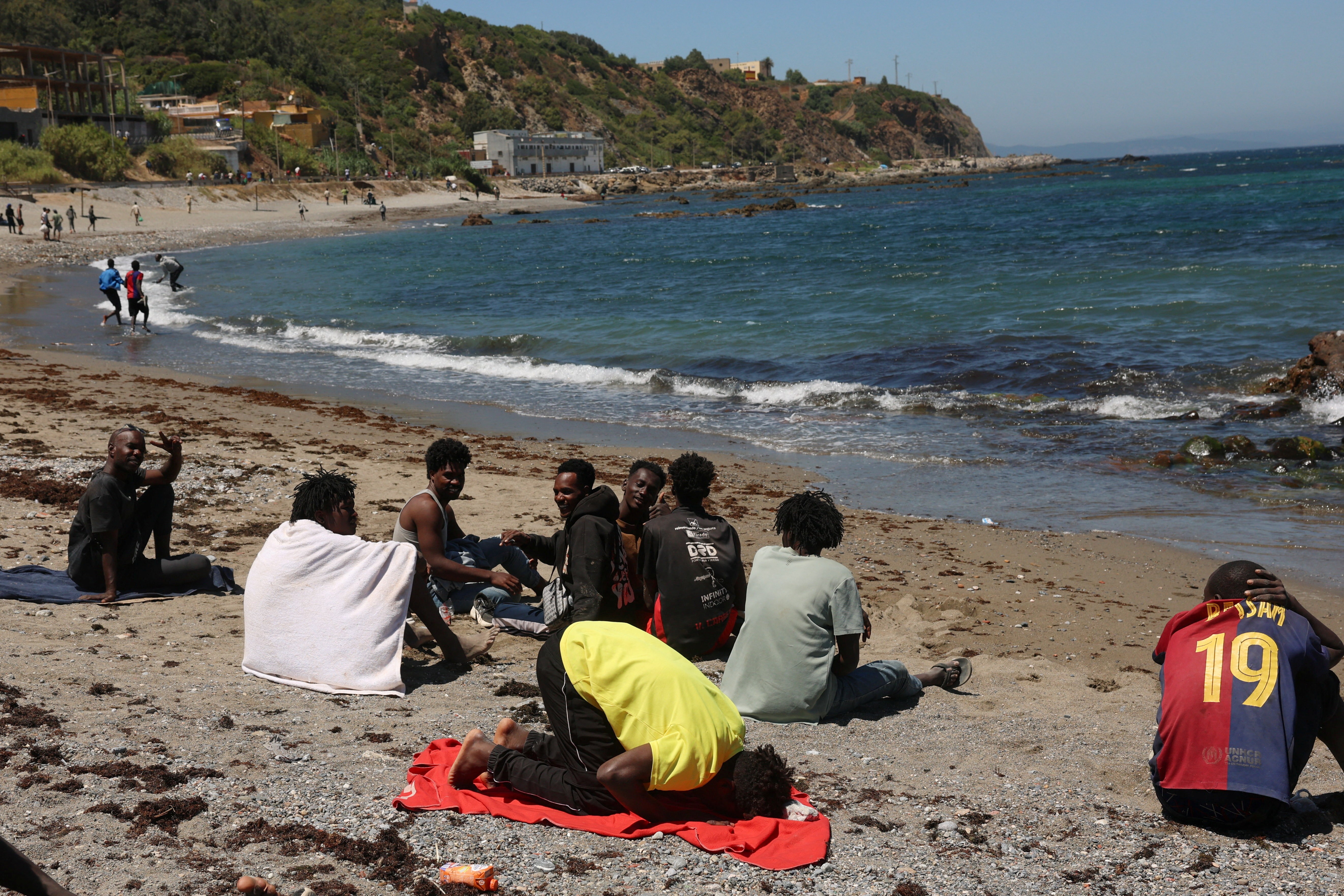
Dozens of migrants from Morocco are sleeping on an isolated beach in Ceuta, a Spanish autonomous city in North Africa, under police surveillance. This situation arises after a large influx of approximately 50,000 people entered Ceuta on Thursday, May 30th. While Spanish authorities report that most have returned to Morocco, those who remain face overcrowding at the local migrant reception center. On Sunday, May 2nd, clashes occurred between police and some migrants who were unhappy about being confined to a designated, controlled area. Even before last week's surge, migrants arriving in previous days struggled with inadequate support and infrastructure due to the overwhelmed shelter. Many Moroccans who crossed on Thursday stayed less than 24 hours before returning home, as businesses were closed due to fear of looting. On Saturday, May 1st, hundreds of migrants were escorted to the border by military personnel, and a floating barrier was installed in the sea to prevent illegal water crossings. According to the Spanish government, 72 people died attempting to swim across. Miguel Ángel Pérez, the Spanish government representative in Ceuta, stated on Sunday that over a thousand people received health services, in addition to the 72 deaths. He noted that the situation had improved but much work remained. Morocco's Ministry of the Interior attributed the migration flow to social media misinformation, human trafficking networks, and a misunderstanding of a Spanish policy preventing immediate return of intercepted migrants at sea. The ministry reiterated its commitment to combating illegal migration and called for shared responsibility in migration management.
The events in Ceuta highlight the complex and often harsh realities of irregular migration flows into Europe. The Spanish government's actions, including border reinforcement and migrant returns, reflect a strategy to manage national sovereignty and EU external borders, while Morocco's statements point to a desire for burden-sharing and control over information disseminated to potential migrants. The situation underscores the systemic challenges of addressing root causes of migration, the strain on border infrastructure, and the humanitarian consequences for individuals undertaking perilous journeys. Future policy must balance security concerns with human rights obligations and foster greater international cooperation to manage these flows effectively and humanely.
AI-generated to prompt reflection — not editorial opinion, not advice, not a statement of fact. How this works.
