Migrants Surge Towards Ceuta; Vehicles Torched Amid Border Tensions
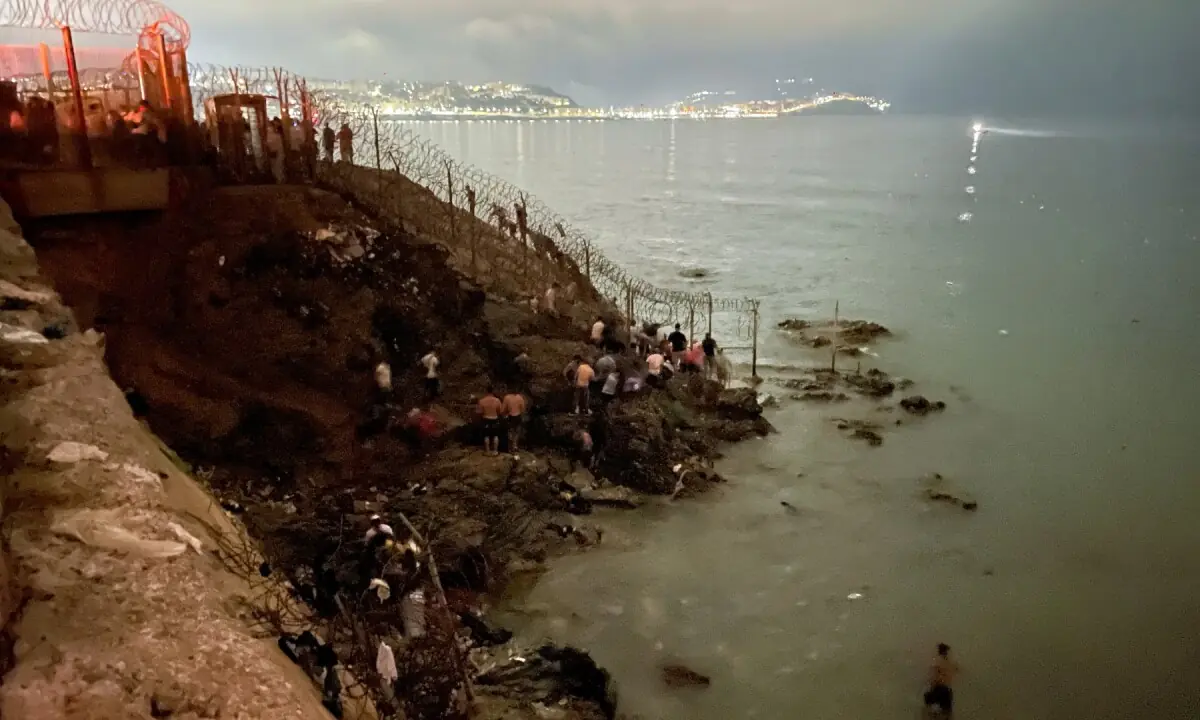
Thousands of migrants attempted to cross into Spain's Ceuta enclave from the Moroccan town of Fnideq overnight, despite a significant security presence. Spanish state television reported that between 2,000 and 3,000 individuals successfully entered Ceuta on Thursday, with most crossings occurring before midday. Ceuta and Melilla, Spanish cities bordering Morocco, are the EU's only land borders with Africa and frequently see large numbers of migrants trying to reach Europe. Spain deployed military and police reinforcements to Ceuta following the surge, and authorities recovered nine bodies. In Fnideq, clashes erupted as Moroccan authorities used water cannons and reinforced security to prevent migrants from approaching the border, resulting in the burning of a bus and seven vehicles. Migrants described chaotic scenes, including stampedes, as they sought alternative routes along the coast or attempted to swim. Many, including women, children, and minors from Morocco and Sub-Saharan Africa, were hoping to reach Ceuta. Some individuals, like Brahim, 32, arrived from Tangier hoping to cross but found the gate effectively closed. Fatima Mahli, a resident of Tetouan, expressed her distress at being stuck with her daughters, as her husband had already departed to swim to Ceuta. The influx occurs as Spain's government has adopted a pro-migrant stance, recently launching a program to grant legal status to approximately 500,000 undocumented migrants, which has reportedly doubled the number of applications.
The situation at the Ceuta border highlights the persistent challenges of irregular migration and border management. The surge in attempted crossings, coupled with the tragic recovery of bodies and the destruction of vehicles, underscores the desperation of individuals seeking to reach Europe and the extreme measures employed by both migrants and authorities. Spain's recent pro-migrant policies, while aiming to address undocumented populations, may inadvertently create incentives for increased migration attempts. Future policy considerations should balance humanitarian concerns with effective border control strategies, potentially exploring regional cooperation and addressing root causes of migration to mitigate such volatile events. The long-term implications involve navigating international legal obligations, humanitarian crises, and national security concerns within a complex geopolitical landscape.
AI-generated to prompt reflection — not editorial opinion, not advice, not a statement of fact. How this works.