Mikel Merino's late goal sends Spain past Belgium into World Cup semi-final against France
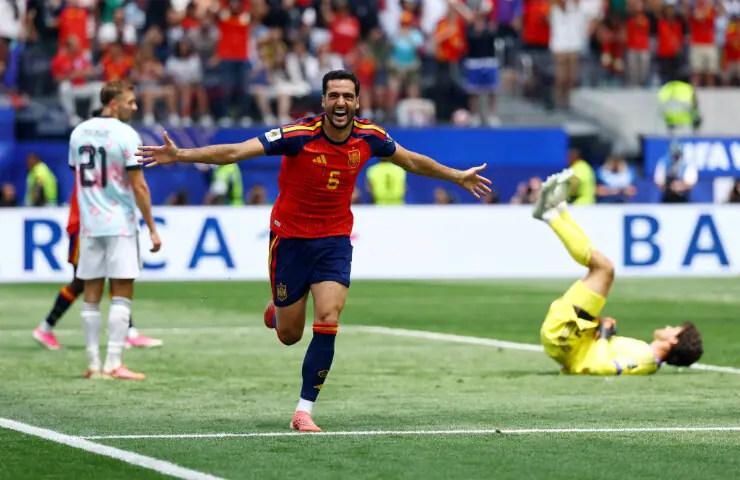
Mikel Merino scored a dramatic late goal to secure a 2-1 victory for Spain over Belgium in the FIFA World Cup quarter-finals on Friday, setting up a semi-final clash with France. The match, held at SoFi Stadium, saw Spain take the lead in the 30th minute through Fabian Ruiz, who finished after a shot from Dani Olmo was parried by Belgian goalkeeper Thibaut Courtois. Belgium equalized just before halftime in the 41st minute when Charles De Ketelaere headed home a cross from Timothy Castagne, marking the first goal Spain had conceded in the tournament. Belgium faced challenges with key player Youri Tielemans suffering a hamstring injury during warm-ups and already missing Amadou Onana to an ACL rupture, forcing them to field a near second-choice midfield against Spain's dominant possession style. After halftime, Lamine Yamal of Spain showed increasing influence, while Belgium's coach Rudi Garcia introduced veteran striker Romelu Lukaku. The game became more open, with both teams having chances. A significant moment occurred in the 70th minute when Thibaut Courtois was forced off due to injury and replaced by debutant goalkeeper Senne Lammens. In the 88th minute, Lammens spilled a shot from Pau Cubarsi, allowing substitute Mikel Merino to pounce on the rebound and score the winning goal. This marks Merino's second consecutive late winner for Spain. The Belgian team, described as an 'ageing Golden Generation,' appeared distraught, while Spain celebrated their advancement to face France in Dallas on Tuesday.
This World Cup quarter-final outcome highlights the critical role of substitute players and goalkeeper performance under pressure. Spain's victory, secured by a late goal from Mikel Merino, underscores the strategic advantage of having impactful depth on the bench, particularly in high-stakes knockout matches. Conversely, Belgium's defeat, exacerbated by an injury to their starting goalkeeper Thibaut Courtois and a subsequent error by his replacement, Senne Lammens, demonstrates the fragility of momentum and the psychological toll of late-game errors. The narrative of Belgium's 'Golden Generation' facing a transition period, contrasted with Spain's emerging talent and tactical flexibility, suggests evolving team dynamics within international football. Future tournament strategies may increasingly prioritize squad versatility and mental resilience in crucial moments, recognizing that late-game execution can redefine outcomes irrespective of prior performance.
AI-generated to prompt reflection — not editorial opinion, not advice, not a statement of fact. How this works.