Milky Way Galaxy May Be Larger and Heavier Than Previously Estimated
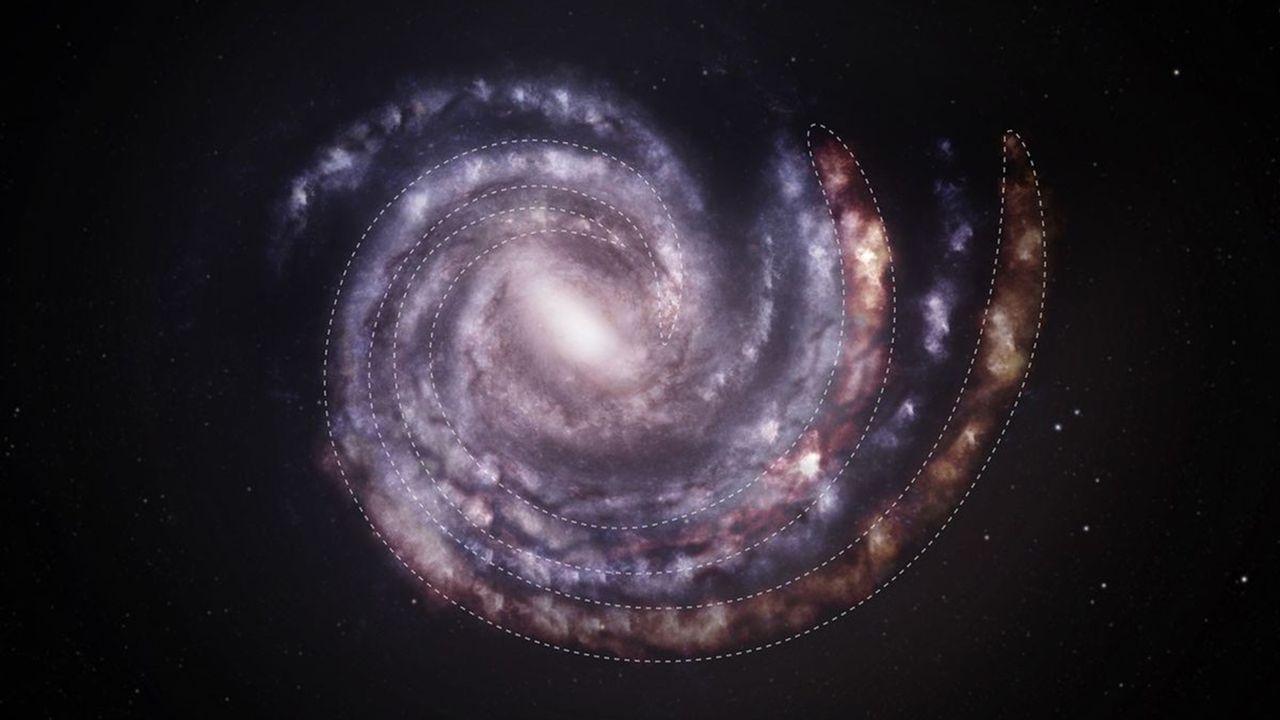
Recent astronomical measurements indicate that the Milky Way galaxy could be significantly larger, heavier, and more asymmetrical than previously understood. Specifically, new data suggests that two of the galaxy's prominent spiral arms are located approximately 10% further from Earth than current estimates. This revised distance measurement has prompted astronomers to consider revising their calculations regarding the overall dimensions and mass of our home galaxy. The implications of these findings could lead to a substantial re-evaluation of the Milky Way's structure and scale. Further research will be necessary to confirm these new estimates and understand their full impact on our understanding of the galaxy.
These updated measurements challenge existing models of the Milky Way's size and mass, suggesting that our current understanding may be incomplete. The 10% revision in the distance to key spiral arms highlights the inherent difficulties in accurately mapping galactic structures from within. This situation underscores the ongoing scientific process of refining knowledge through new observational data. Future research will likely focus on reconciling these new figures with existing theories and potentially developing more sophisticated methods for galactic cartography, which could have long-term implications for cosmological models and our place within the universe.
AI-generated to prompt reflection — not editorial opinion, not advice, not a statement of fact. How this works.