Milky Way May Have 'Flipped' After Ancient Galactic Collision, Study Suggests
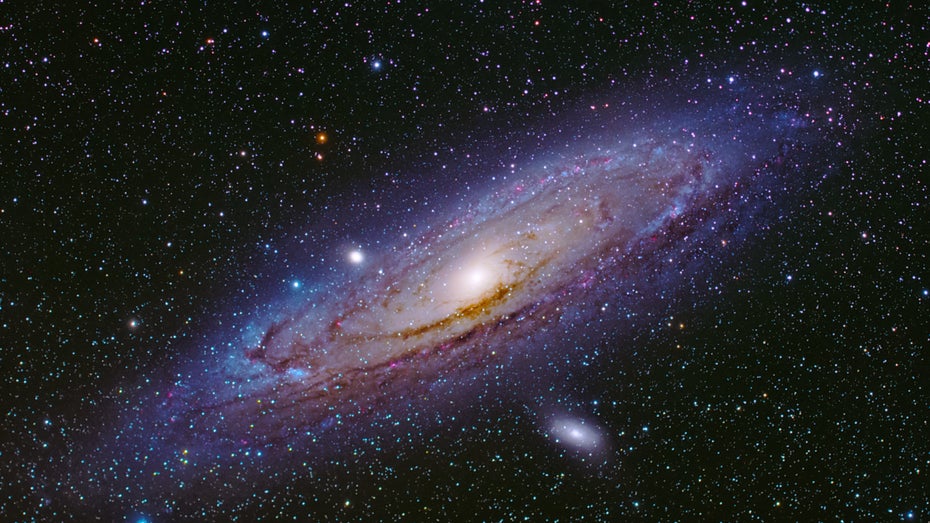
British researchers have proposed a new theory suggesting that the Milky Way galaxy may have undergone a dramatic 'flip' billions of years ago due to a collision with a neighboring galaxy. This event could potentially resolve several long-standing questions about the structure and dynamics of our home galaxy. The hypothesis, based on complex calculations, posits that the impact was significant enough to alter the galaxy's orientation. Understanding this ancient event could provide crucial insights into galactic evolution and the formation of the Milky Way as we observe it today. Further research is expected to explore the implications of this collision theory. The findings aim to clarify existing astronomical puzzles related to the galaxy's current state.
This hypothesis offers a novel perspective on the Milky Way's formation, suggesting a violent past that fundamentally reshaped its structure. By positing a galactic 'flip,' researchers are attempting to reconcile observational data with theoretical models of galactic dynamics. The implications of such a cataclysmic event, if confirmed, could refine our understanding of galaxy mergers and their long-term effects on stellar populations and galactic morphology. Examining the energetic and gravitational forces involved in such a collision highlights the dynamic and often turbulent nature of cosmic evolution, prompting further investigation into the specific mechanisms that could trigger such a dramatic reorientation and its subsequent evolutionary trajectory over billions of years.
AI-generated to prompt reflection — not editorial opinion, not advice, not a statement of fact. How this works.