Milky Way May Have Tilted After Galactic Collision, Astronomers Suggest
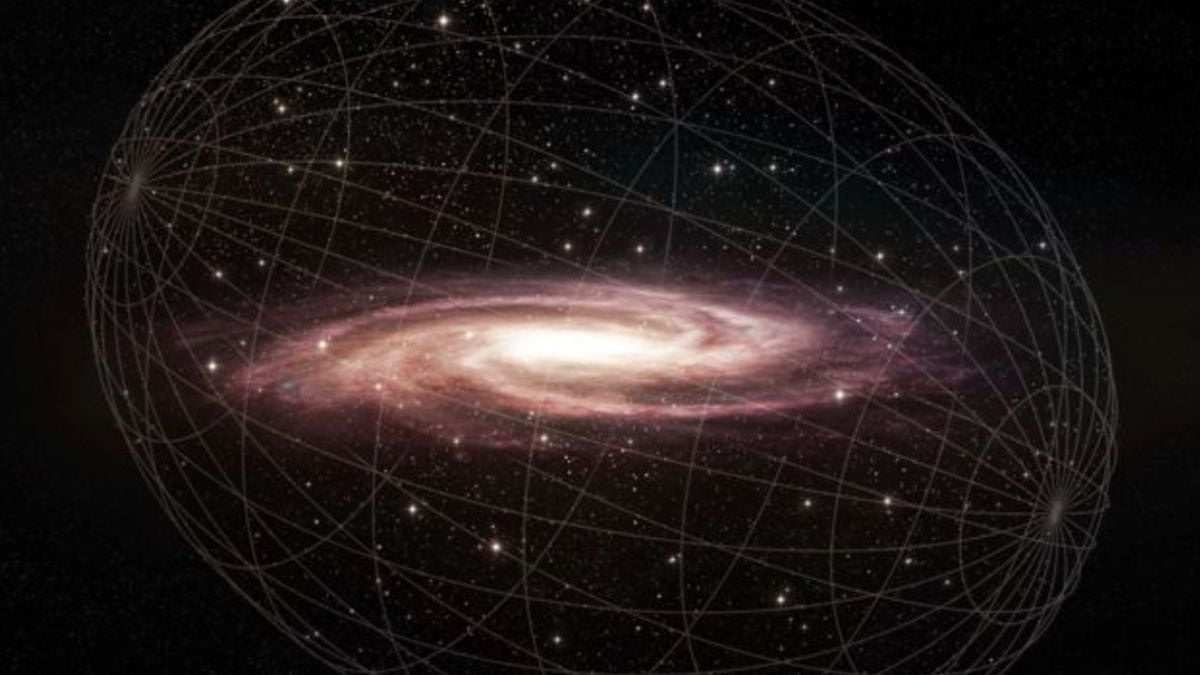
Astronomers have proposed a new theory suggesting that the Milky Way galaxy may have flipped sideways in the distant past. This dramatic event is hypothesized to have occurred following a collision with a smaller, sausage-shaped galaxy. The impact could have caused the Milky Way to reorient itself, altering its orientation in space. This theory offers a potential explanation for some observed characteristics of our galaxy. Further research and simulations are needed to confirm this hypothesis and understand the full implications of such a cosmic event. The collision would have been a significant event in the early history of the Milky Way. Understanding these past interactions is crucial for comprehending the galaxy's current structure and evolution.
This astronomical hypothesis suggests a past galactic collision may have reoriented the Milky Way. Analyzing such events requires rigorous simulation and observational data to validate models of galactic dynamics. Understanding the long-term evolutionary impacts of such collisions is crucial for contextualizing our galaxy's current state and future trajectory within the broader cosmic landscape. The proposed mechanism highlights the dynamic nature of galaxies and the potential for significant structural changes over cosmological timescales, prompting further investigation into the historical interactions that have shaped our galactic home.
AI-generated to prompt reflection — not editorial opinion, not advice, not a statement of fact. How this works.