Milky Way's Disk Flip Explained by Past Merger
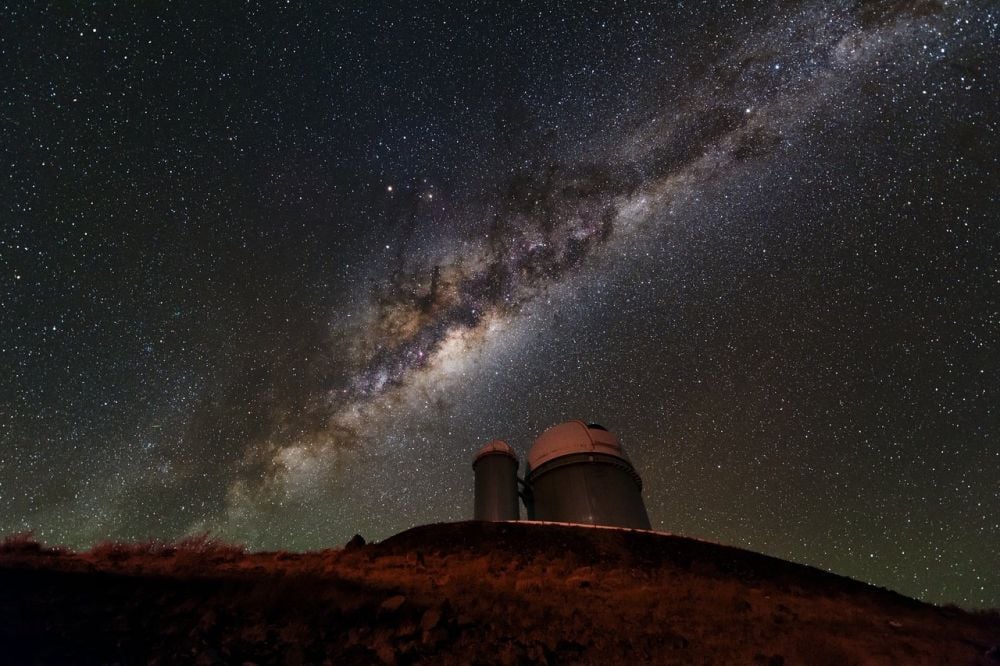
Our galaxy, the Milky Way, possesses two distinct stellar disks: a thin disk containing most stars and a thicker disk composed of much older stars. Recent findings from the European Space Agency's (ESA) Gaia mission revealed a significant difference in their rotation speeds, with the thick disk rotating considerably slower than the thin disk. This discrepancy has been attributed to a dramatic event in the Milky Way's history – a disk flip. Powerful computer simulations suggest that this flip was triggered by a merger event with another galaxy. This merger likely disrupted the original structure, leading to the observed differences in the two disks' properties and rotational characteristics.
The discovery of the Milky Way's past disk flip, likely induced by a galactic merger, offers a profound insight into galactic evolution. Understanding such large-scale structural reconfigurations helps refine models of galaxy formation and dynamics. This event highlights the dynamic and often violent nature of cosmic history, suggesting that galactic structures are not static but are shaped by significant disruptive events over billions of years. Future research will likely focus on the precise timing and impact of this merger, potentially revealing more about the early universe and the processes that lead to the diverse galactic morphologies observed today.
AI-generated to prompt reflection — not editorial opinion, not advice, not a statement of fact. How this works.