Milky Way's Past Collision Reshaped Galaxy; Another Collision Looms
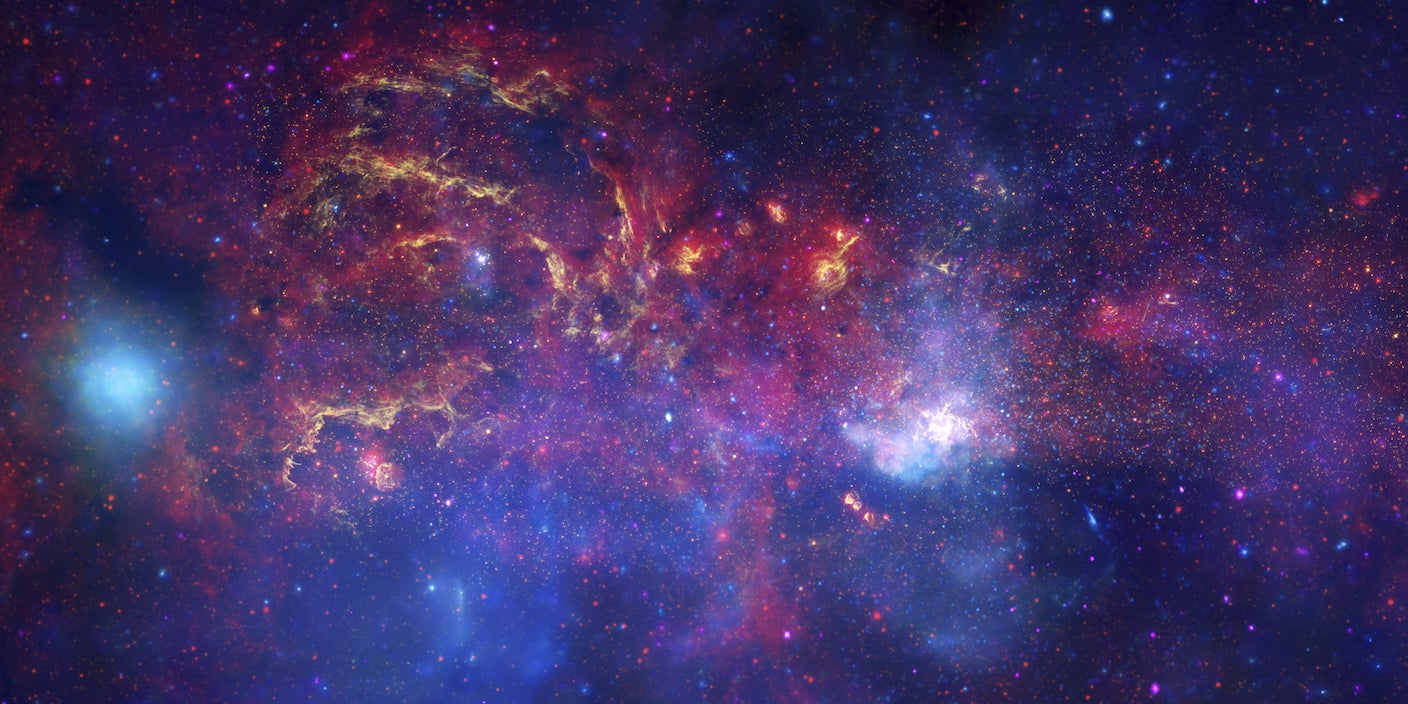
The Milky Way galaxy, perceived as static, has undergone significant transformations over cosmic timescales. Billions of years ago, a cataclysmic collision fundamentally rewired the galaxy's structure. This event dramatically altered the Milky Way's composition and arrangement. Astronomers have now determined that the galaxy is currently on a trajectory for another major collision in the future. This impending event suggests that galactic evolution is a dynamic and ongoing process. The discovery highlights the vast, transformative forces shaping our cosmic neighborhood. Understanding these past and future events provides crucial insights into galactic dynamics and evolution. The night sky, often seen as unchanging, is in fact a record of immense cosmic events.
Galactic evolution is characterized by dynamic processes, including mergers and collisions, which are fundamental to the formation and reshaping of galaxies over billions of years. The Milky Way's history of such events underscores that its current structure is a transient state. Future collisions, while on vast timescales, indicate ongoing cosmic evolution and potential for significant structural changes. Analyzing these events helps refine models of galactic formation and predict the long-term destiny of our solar system within the context of larger cosmic structures. This perspective shifts focus from a static view of the universe to one of continuous, large-scale transformation driven by gravitational interactions.
AI-generated to prompt reflection — not editorial opinion, not advice, not a statement of fact. How this works.