Minas Gerais Legislature Approves 2027 Budget Guidelines with R$7.67 Billion Deficit
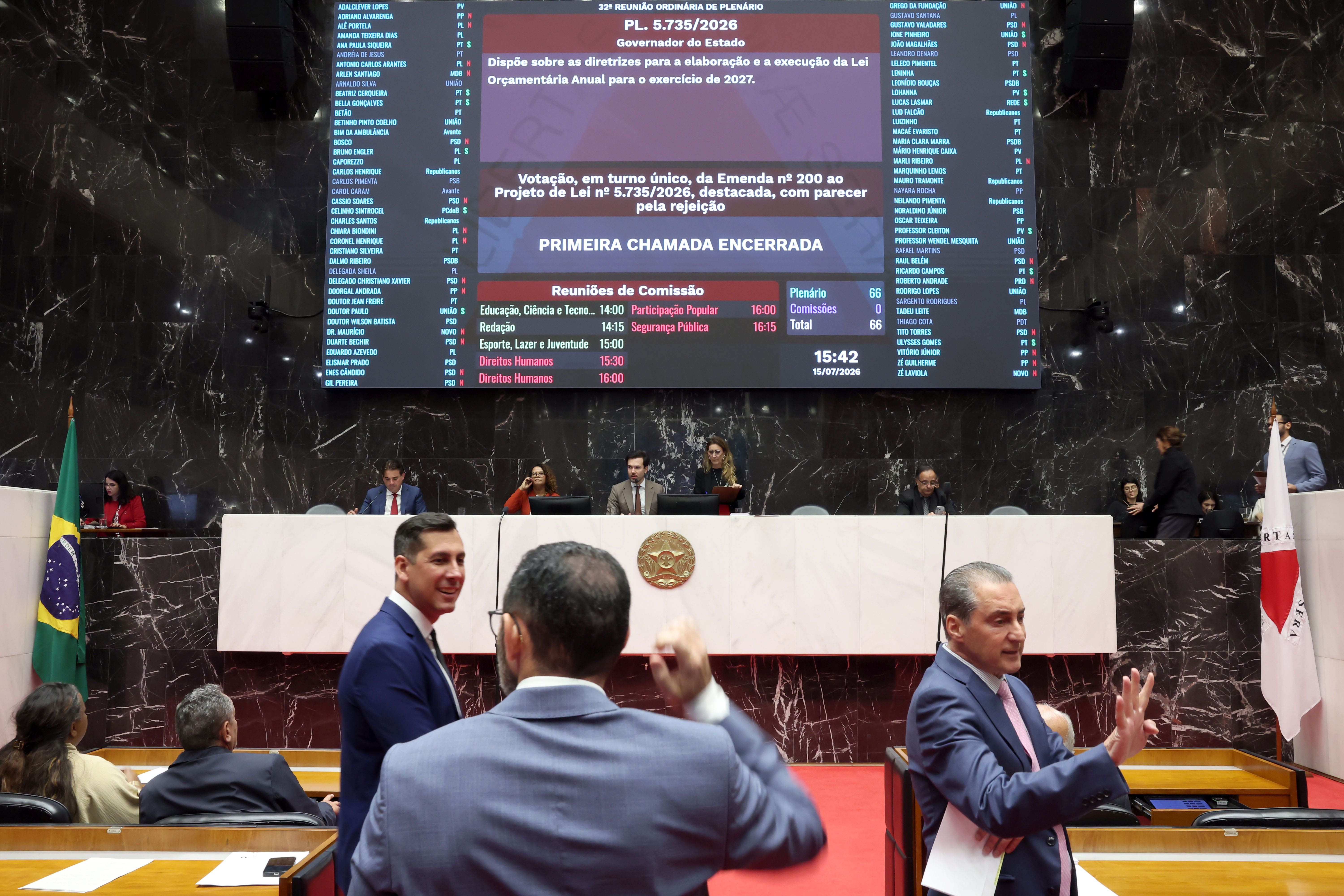
The Legislative Assembly of Minas Gerais (ALMG) has approved the 2027 Budget Guidelines Law (LDO), projecting a deficit of R$7.67 billion. The bill, authored by Governor Mateus Simões (PSD), passed with amendments proposed by lawmakers and now proceeds to the governor for analysis. Estimated revenue for 2027 is R$142.79 billion, with total expenses projected at R$150.46 billion, resulting in the deficit. This projected deficit is approximately 47% larger than the R$5.21 billion deficit estimated for 2026 in the Annual Budget Law (LOA). Mandatory expenses constitute a significant portion of the total expenditure, accounting for R$132.7 billion, or 88.2%. These mandatory costs include personnel expenses of R$96.2 billion, other constitutional expenditures totaling R$11.6 billion, and public debt servicing. The debt service for 2027 is estimated at R$7.76 billion, factoring in the state's adherence to the Program for Full Payment of State Debts (Propag). The primary source of revenue is expected to be the Tax on Circulation of Goods and Services (ICMS), with a gross forecast of R$94.99 billion. The LDO also anticipates R$26.21 billion in tax exemptions for 2027, a figure more than triple the projected deficit, with ICMS exemptions alone reaching R$22.78 billion. This extensive tax relief drew criticism from the opposition, with Deputy Bella Gonçalves (PT) questioning the necessity of privatizing the Minas Gerais Water Company (Copasa) for R$8.38 billion when tax exemptions could potentially address public finances. The approved LDO includes amendments aimed at improving the monitoring of investments in technical professional education and the formulation of public policies to prevent school dropout among students with disabilities or developmental disorders.
The approval of the 2027 Budget Guidelines Law in Minas Gerais highlights a significant projected fiscal deficit, driven by substantial mandatory expenditures and considerable tax exemptions. The widening gap between projected revenue and expenses, particularly the increase in the deficit compared to the previous year, signals potential fiscal challenges ahead. The substantial tax exemptions, exceeding the projected deficit, raise questions about revenue generation strategies and the prioritization of fiscal incentives versus direct public service funding. Evaluating the long-term impact of these exemptions on state revenue and the effectiveness of public spending will be crucial for sustainable fiscal management. Future policy decisions should consider the trade-offs between tax relief, debt servicing, and essential public investments to ensure long-term economic stability and equitable resource allocation within the state.
AI-generated to prompt reflection — not editorial opinion, not advice, not a statement of fact. How this works.