Mobile Battery System Uses EV Batteries to Prevent Power Outages in Brazil
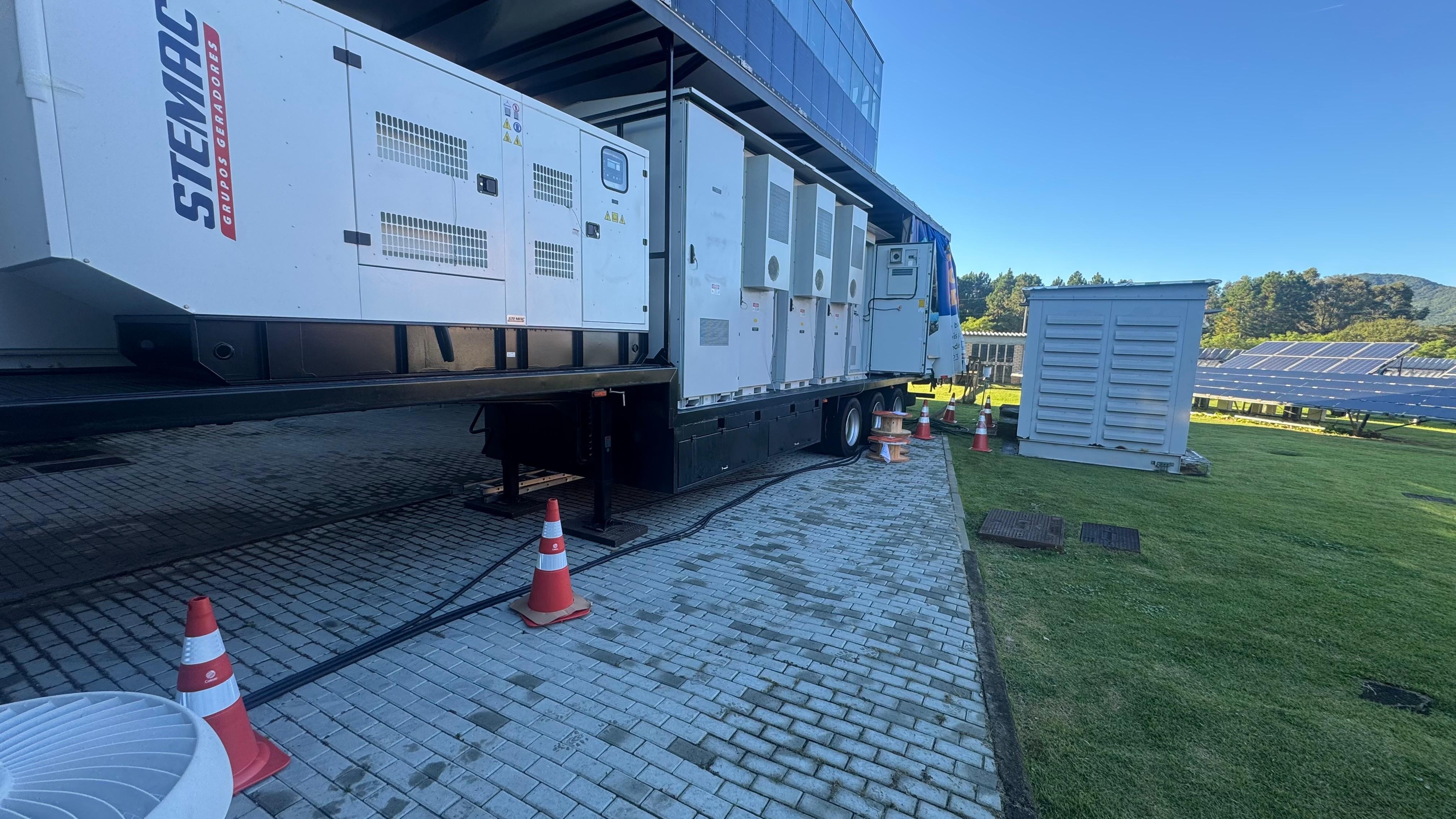
A collaborative project in Brazil is developing a novel Transportable Battery Energy Storage System (STAEB) to provide temporary power during electricity supply disruptions. This initiative, a partnership between Celesc, the Federal University of Santa Catarina (UFSC), and the Stemmer Foundation for Research, Development, and Innovation (FEESC), aims to enhance grid flexibility and reliability. The project is funded with R$11.36 million, with Celesc contributing R$10.26 million and UFSC providing R$1.09 million in counterpart funding. The FEESC manages the project's administrative and financial aspects, with development scheduled from November 2023 to October 2027.
The STAEB is being built on a custom semi-trailer, integrating new and second-life electric vehicle (EV) batteries, along with a backup diesel generator. Its key advantage is mobility, allowing it to be deployed to various locations to support planned maintenance, emergency outages, or periods of high energy demand. This mobile unit will function as a temporary energy reservoir, increasing the grid's capacity and providing real-world operational data for this underutilized application in Brazil. A significant aspect of the project is the repurposing of EV batteries that have reached approximately 80% of their original capacity. Instead of being discarded, these 'second-life' batteries retain sufficient performance for stationary energy storage, extending their useful life and mitigating environmental concerns associated with e-waste.
Helena Naspolini, the STAEB project coordinator, highlighted the goal of transforming an environmental liability into a business asset, noting that these second-life batteries can last an additional 8 to 10 years in the electricity sector. The project also involves WEG Equipamentos Elétricos S.A. for the storage system prototype and Trucvan Indústria e Comércio Ltda. for the semi-trailer manufacturing. Leonardo Pacheco, the project manager at Celesc, emphasized that this application of second-life batteries in the electrical grid is a global first, positioning Celesc at the forefront of research and innovation.
This project addresses the critical challenge of grid stability by leveraging second-life electric vehicle batteries, a strategy that offers dual benefits of environmental stewardship and enhanced energy infrastructure resilience. By repurposing batteries that are no longer optimal for automotive use, the initiative tackles the growing e-waste issue while creating a mobile, flexible power source. This approach highlights a systemic shift towards circular economy principles within the energy sector, demonstrating how technological advancements in one domain (EVs) can yield innovative solutions in another (grid management). The project's success could inform future energy storage policies and encourage wider adoption of similar mobile solutions, potentially reducing reliance on less sustainable backup power sources and improving grid responsiveness to both planned and unplanned disruptions. The integration of public institutions, universities, and private companies exemplifies a robust model for accelerating innovation and translating research into practical applications that benefit society and the environment.
AI-generated to prompt reflection — not editorial opinion, not advice, not a statement of fact. How this works.