MOF Material's Properties Change Dramatically in Thin Layers, Austrian Study Finds
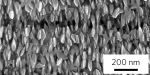
Metal-organic frameworks (MOFs), materials recognized with the 2025 Nobel Prize in Chemistry for their extreme porosity, exhibit entirely different characteristics when formed into thin layers. A team of researchers from Austria has discovered that a thin layer of MOF material lacks the pores that define its bulk form. This finding challenges previous assumptions about the behavior of MOFs at the nanoscale. The research indicates a significant shift in the material's structure and properties when reduced to a thin film. This revelation could have profound implications for the design and application of MOFs in various technological fields. Understanding this dimensional dependence is crucial for harnessing the full potential of these advanced materials. Further investigation into the specific mechanisms behind this structural transformation is warranted.
The discovery that metal-organic frameworks (MOFs) fundamentally alter their porous structure when thinned to a layer presents a significant challenge to established material science paradigms. This finding underscores the critical importance of dimensional effects in material behavior, particularly as nanotechnology advances. Future applications of MOFs may require re-evaluation, considering that their performance characteristics could diverge substantially from bulk predictions. This necessitates a deeper understanding of the interfacial physics and chemistry governing thin-film MOFs to unlock their potential in areas like catalysis, separation, and sensing, while also mitigating risks associated with unexpected property shifts.
AI-generated to prompt reflection — not editorial opinion, not advice, not a statement of fact. How this works.