Mojtaba Khamenei's Absence: Can Iran's Islamic Republic Have an Absent Leader?
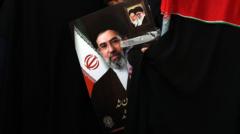
Mojtaba Khamenei, the newly appointed leader of Iran's Islamic Republic, has remained absent from public view for over four months since assuming his father's position. Despite the circulation of letters attributed to him, there have been no public appearances, published images, or audio recordings of his voice. This prolonged absence has led to discussions about its potential religious and political implications. Some observers are drawing parallels between Khamenei's seclusion and the concept of the 'occultation' of Shia Islam's Twelfth Imam, as well as the absences of prophets in religious narratives. The significance of this 'absence' is being debated from both a religious and political standpoint within the context of the Iranian state. The lack of public engagement raises questions about the nature of leadership and legitimacy in the Islamic Republic. The situation prompts an examination of how a leader's visibility, or lack thereof, impacts public perception and political stability. The comparison to religious figures suggests an attempt to frame his absence in a way that aligns with deeply held beliefs, potentially to bolster his authority or manage public expectations. The political ramifications of such a strategy remain to be seen.
The prolonged public absence of Mojtaba Khamenei, following his succession, presents a unique leadership dynamic for the Islamic Republic. The framing of this absence through religious narratives, particularly the occultation of the Twelfth Imam, appears to be a strategic communication effort. This approach may aim to imbue his leadership with a sense of divine mandate and historical inevitability, potentially mitigating concerns arising from his lack of direct public engagement. From a political systems perspective, such a strategy could be seen as an attempt to manage legitimacy and authority in an era where transparency and direct communication are increasingly valued globally. The long-term effectiveness of this approach will likely depend on whether it can sustain public confidence and political stability without the traditional markers of active leadership, or if it inadvertently creates a vacuum that could foster internal dissent or external scrutiny in the coming decade.
AI-generated to prompt reflection — not editorial opinion, not advice, not a statement of fact. How this works.